How to Start a Junk Removal Business (Complete Guide)
Somewhere in your city right now, someone is staring at a garage full of junk they've been meaning to deal with for three years. A landlord just got the keys back to a trashed rental unit. A family is cleaning out their parents' home after a move to assisted living. And all of them are about to Google "junk removal near me."
That could be your phone ringing.
Junk removal is one of the most accessible, profitable service businesses you can start. The startup costs are low, the demand is constant, and the profit margins are genuinely impressive. You don't need a trade license. You don't need years of specialized training. You need a truck, a strong back, and a plan.
Here's that plan.
Why Junk Removal? The Business Case
Before we get into the how, let's talk about the why. Junk removal isn't glamorous, but the numbers are:
- Low barrier to entry - Start with a truck and trailer, minimal licensing
- High profit margins - 40-60% is standard in the industry
- Steady demand - People accumulate junk year-round. Moves, renovations, estate cleanouts, and decluttering trends keep the phone ringing
- Scalable - Start solo, add crews as revenue grows
- Recession-resistant - Even in downturns, people still need junk removed (foreclosures and cleanouts actually increase)
The junk removal industry in North America is worth over $10 billion and growing. Companies like 1-800-GOT-JUNK? proved the model at scale, but the real opportunity is local. Most markets have room for another reliable, professional junk removal company - especially one that actually answers the phone and shows up on time.
Step 1: Research Your Local Market
Don't skip this. Spend a week understanding your market before you spend a dollar.
Check out the competition:
- Google "junk removal near me" and see who comes up
- Look at their Google reviews - what are clients praising? What are they complaining about?
- Call a few competitors for quotes. Note their pricing, professionalism, and availability
- Check if they have websites, branded trucks, uniforms - or if they're running a scrappy operation
Identify gaps:
- Are competitors booking out days or weeks in advance? That's unmet demand
- Are reviews mentioning no-shows, poor communication, or hidden fees? That's your opportunity
- Are there underserved areas or neighborhoods?
Understand your dump/recycling options:
- Locate every landfill, transfer station, and recycling center within a reasonable radius
- Get their fee schedules - this directly affects your pricing
- Check hours of operation - some close early or aren't open weekends
- Look into donation centers (Habitat for Humanity ReStores, Goodwill) for items that can be diverted from landfills
This research will shape everything from your pricing to your marketing.
Step 2: Handle the Legal Stuff
Nobody starts a business for the paperwork, but getting this right from the start saves you headaches later.
Business registration:
- Choose a business structure (sole proprietorship to start, LLC/corporation as you grow)
- Register your business name
- Get your federal tax ID (EIN in the US, BN in Canada)
- Open a business bank account - keep personal and business finances separate from day one
Licenses and permits:
- General business license from your city/municipality
- Waste hauler or transporter permit (requirements vary - check locally)
- Some areas require specific permits for hauling certain materials (electronics, appliances with refrigerants)
- If crossing state/provincial lines, check if additional permits are needed
Insurance (non-negotiable):
- General liability insurance ($500K-$1M coverage) - Protects against property damage and injury claims
- Commercial auto insurance - Your personal policy won't cover commercial use
- Workers' compensation - Required once you hire employees, smart to get early
- Expect to pay $1,500-$3,000/year for a small operation
Get at least three insurance quotes. Mention you're in junk removal specifically - some insurers offer better rates for hauling businesses.
Step 3: Get Your Equipment
The good news: you don't need a fleet to start.
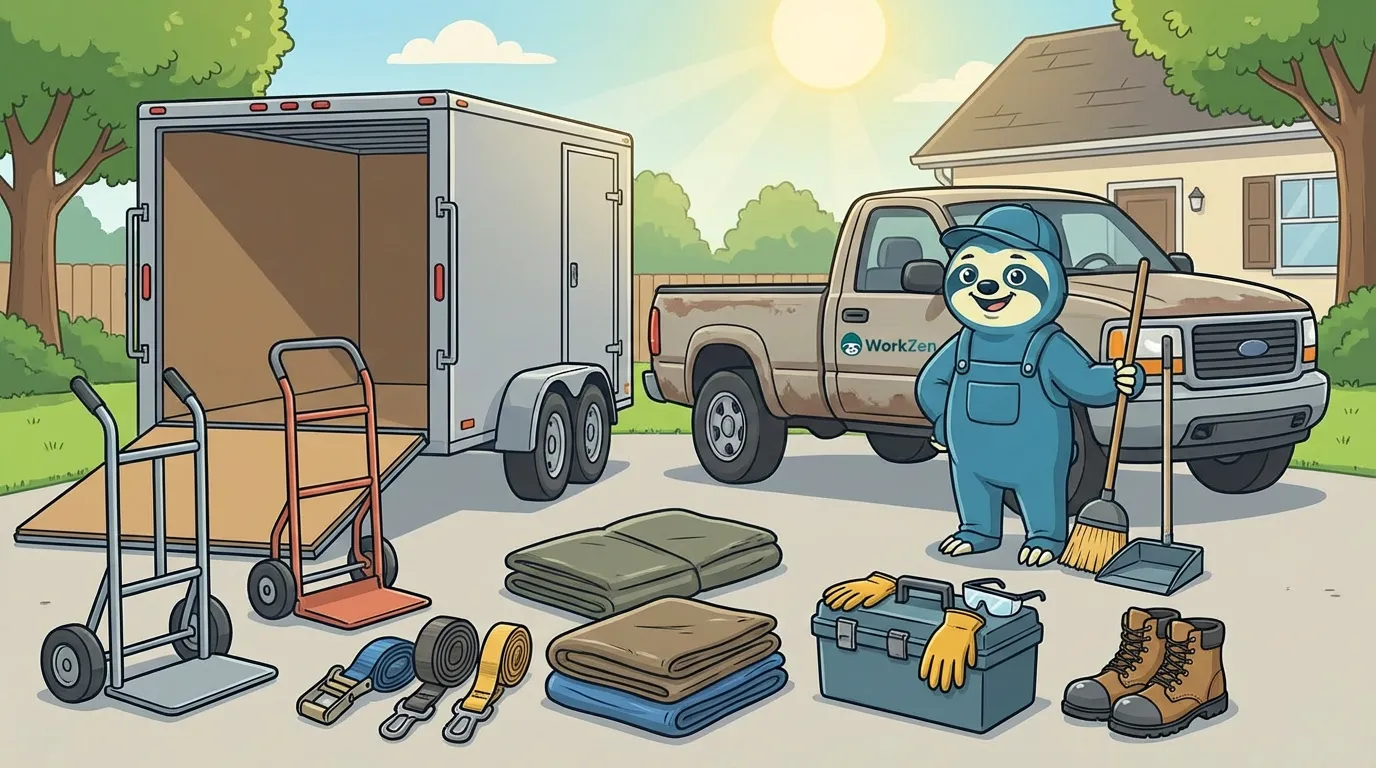
Minimum viable setup ($5,000-$15,000):
- Used pickup truck (if you don't already own one)
- Utility trailer (6x12 or larger)
- Basic hand tools: dolly, hand truck, furniture straps, tarps
- Work gloves, safety glasses, steel-toe boots
- Broom and dustpan (always leave the site cleaner than you found it)
Level-up setup ($20,000-$50,000):
- Box truck (10-16 ft) or dump trailer
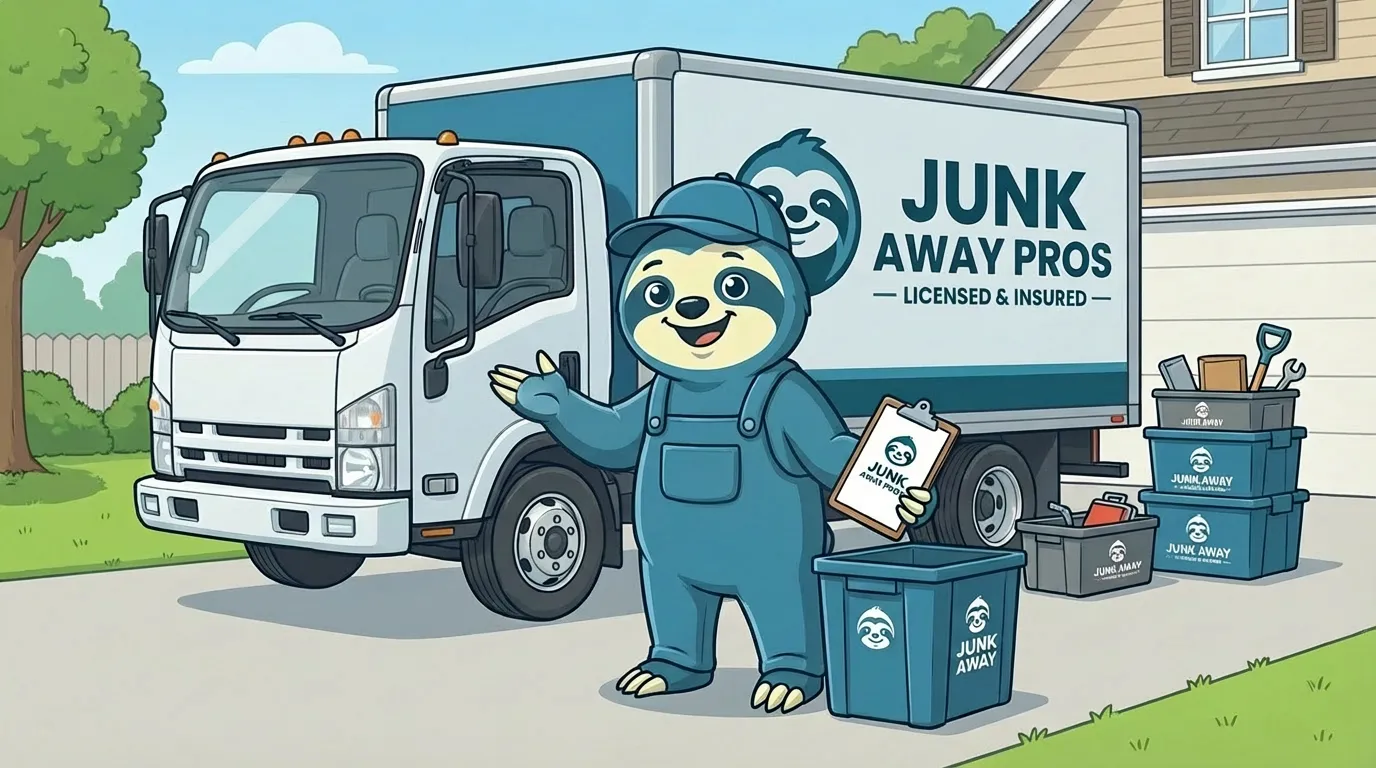
- Vehicle branding (wrap or magnets)
- More specialized equipment: appliance dolly, moving blankets, bolt cutters
- Safety equipment: hard hats, back braces, first aid kit
Pro tip: Start with a truck and trailer. It's cheaper, and a trailer can be detached when you're not working. As revenue grows, graduate to a box truck - it looks more professional, holds more volume, and is easier to load.
Whatever you drive, keep it clean. A clean, branded truck parked on a residential street is a rolling billboard. A rusty truck with junk falling out of the back is a reputation killer.
Step 4: Set Your Pricing
Pricing is where most new junk removal businesses stumble. Too low and you're working for free after dump fees. Too high and you lose jobs to competitors.
The volume-based model (industry standard):
Most junk removal companies price by how much space the load takes in the truck:
| Load Size | Typical Price Range |
|---|---|
| Minimum/Single Item | $75-$150 |
| 1/8 Truck | $150-$250 |
| 1/4 Truck | $250-$350 |
| 1/2 Truck | $350-$500 |
| 3/4 Truck | $500-$650 |
| Full Truck | $600-$800 |
Building your price:
- Know your dump fees - This is your floor cost. If a full load costs $150 to dump, that's your minimum before profit
- Factor in labor - Your time or your crew's time has value
- Add fuel costs - Calculate round-trip to the dump site
- Include overhead - Insurance, truck payment, maintenance, marketing
- Add your margin - Aim for 40-60% profit margin
Research competitors in your specific market. Call for quotes on a "garage cleanout" or "full truck load" to benchmark.
Specialty items command premium pricing:
- Hot tubs: $300-$600 (labor intensive)
- Pianos: $200-$500 (heavy, awkward)
- Construction debris: Price by weight, plus dump surcharges
- Appliances with refrigerants: Additional disposal fees apply
Creating professional estimates quickly matters here. When a potential client calls, you want to quote fast and follow up faster. Using estimating software can help you look professional and win more jobs against competitors who scribble numbers on the back of a napkin.
Step 5: Build Your Brand
You're not just "some guy with a truck." You're a professional junk removal service. Brand accordingly.
Business name:
- Keep it simple, memorable, and local if possible
- Make sure the domain name is available
- Check that nobody else in your area is using it
Visual identity:
- Get a simple logo (Canva works fine to start, upgrade later)
- Pick 2-3 brand colors
- Apply consistently: truck, uniforms, business cards, website
Online presence (bare minimum):
- Google Business Profile - This is your #1 lead source early on. Fill it out completely, add photos, and start collecting reviews immediately
- Simple website - Even a single page with your services, service area, phone number, and a way to request a quote
- Facebook business page - Many junk removal leads come through Facebook and Marketplace
As you grow:
- Professional website with online booking and lead capture
- Before/after photo gallery (with client permission)
- Service area pages for local SEO
- Reviews prominently displayed
Your brand is a promise. Every interaction - from the first phone call to the final sweep of the driveway - either builds or breaks that promise.
Step 6: Get Your First Clients
Here's the fun part. You have a truck, insurance, and a brand. Time to get the phone ringing.
Free/low-cost methods (start here):
- Google Business Profile - Optimize it, post photos regularly, respond to every review
- Craigslist - Post in the "services" section. It's old school but still works for junk removal
- Facebook Marketplace and groups - Join local community groups, offer your services (follow group rules)
- Nextdoor - Hyperlocal and perfect for home services
- Door hangers/flyers - Target neighborhoods with older homes, rental properties, storage facilities
- Partnerships - Connect with real estate agents, property managers, moving companies, and estate sale organizers. These folks regularly need junk removed and can send you steady work
Paid methods (when ready to scale):
- Google Ads - "Junk removal near me" searches have high intent. Start with a small daily budget
- Facebook/Instagram ads - Target homeowners in your service area
- Lead generation platforms - Some are worth the cost, some aren't. Test carefully
- Vehicle wrap - One-time cost, years of impressions
The key to early growth? Speed and communication. Answer every call. Respond to every message quickly. Show up when you say you will. In an industry where "some guy with a truck" ghosts clients regularly, simply being professional and reliable sets you apart.
Using a CRM to manage your leads from the start - even a simple one - keeps you from losing potential clients in a mess of texts, voicemails, and sticky notes. Track where leads come from so you know what's working.
Step 7: Deliver Exceptional Service
Repeat business and referrals will become your most profitable channels. Earn them.
Before the job:
- Confirm the appointment the day before (text works great)
- Arrive on time. If you're running late, communicate immediately
- Be clear about pricing before you start loading
During the job:
- Be professional, friendly, and respectful of the client's property
- Protect floors, walls, and doorways when carrying items out
- Sort as you go - recyclables, donations, and landfill items separated
- Work efficiently but don't rush
After the job:
- Sweep the area clean. Leave it better than you found it
- Collect payment on-site (have mobile payment options ready)
- Ask for a Google review while the experience is fresh
- Follow up with a thank-you text or email
The details that win referrals:
- Booties or shoe covers indoors
- Blankets to protect doorways and railings
- A friendly attitude even when handling disgusting stuff (and you will handle disgusting stuff)
- Donating usable items and telling the client you did - they love knowing their old furniture went to a family in need instead of a landfill
Generating a professional invoice on the spot instead of a handwritten receipt signals that you're a real business, not a side hustle.
Step 8: Manage Your Operations
As jobs increase, chaos follows if you're not organized.
From day one, track:
- Every lead and where it came from
- Every job - date, address, what was hauled, price charged, dump fees paid
- Revenue and expenses (separate accounts, always)
- Mileage and fuel costs
- Client information for follow-ups and repeat business
Trying to run a growing junk removal business from your phone's notes app and a spreadsheet gets painful fast. Job management software designed for service businesses keeps everything in one place - scheduling, client info, job details, invoicing - so you spend less time on admin and more time making money.
Financial basics:
- Set aside 25-30% of revenue for taxes from day one
- Track every expense - dump fees, fuel, maintenance, supplies
- Understand your cost per job so you know your real profit
- Invoice promptly and follow up on late payments
Step 9: Scale When Ready
Once you're consistently busy and profitable, it's time to think about growth.
Hire your first crew member when:
- You're turning away jobs due to capacity
- Two-person jobs are costing you efficiency (wrestling a couch alone is slow)
- You want to run multiple jobs per day
Hiring tips:
- Reliability beats experience. You can teach someone to load a truck. You can't teach them to show up on time
- Start with part-time or on-call workers to manage cash flow
- Background checks matter - your crew enters people's homes
- Train on safety, client interaction, and your standards
Scaling strategies:
- Add a second truck/crew to double capacity
- Target commercial accounts (offices, retail, construction sites) for larger, recurring revenue
- Offer specialty services: hoarding cleanouts, estate cleanouts, construction debris
- Expand your service area gradually
When to raise prices:
- When you're booking out more than 3-5 days in advance
- When dump fees increase
- When you add crew (higher labor costs)
- Annually, at minimum - costs always go up
Common Mistakes to Avoid
Learn from others' expensive lessons:
- Underpricing - The #1 killer. Know your costs, charge what you're worth
- No insurance - One property damage claim without insurance can end your business
- Ignoring dump fees - They eat into margins fast. Factor them into every quote
- Poor communication - Not returning calls, showing up late, no confirmation texts. This is how you get bad reviews
- Not collecting reviews - Happy clients forget. Ask every time, make it easy
- Mixing personal and business finances - Makes taxes a nightmare and looks unprofessional
- Trying to do everything yourself forever - Your first hire feels expensive until you realize two people do three times the work of one
- Illegal dumping - Never. The fines are massive, the environmental damage is real, and getting caught destroys your reputation permanently
Your First 30 Days - Action Checklist
Here's a practical timeline to get from "I want to start" to "I'm open for business":
Week 1: Foundation
- Research local market and competition
- Choose business name and check availability
- Register business and get tax ID
- Open business bank account
- Get insurance quotes
Week 2: Setup
- Purchase insurance
- Get required licenses and permits
- Secure truck/trailer
- Buy essential tools and safety equipment
- Set up accounting (even a simple spreadsheet)
Week 3: Brand & Online Presence
- Create logo and basic branding
- Set up Google Business Profile
- Create a simple website or landing page
- Set up Facebook business page
- Order business cards and vehicle magnets or door hangers
Week 4: Launch
- Post on Craigslist and Facebook groups
- Distribute door hangers in target neighborhoods
- Reach out to real estate agents and property managers
- Complete your first jobs
- Ask for Google reviews from your first clients
The Bottom Line
Starting a junk removal business is one of the most straightforward paths into entrepreneurship. Low startup costs, high margins, constant demand, and a clear path to scaling - it checks every box.
The businesses that thrive in this space aren't the ones with the biggest trucks or the flashiest marketing. They're the ones that answer the phone, show up on time, do clean work, charge fairly, and make it easy for clients to book and pay.
Start small, deliver excellent service, build your reputation one review at a time, and grow at a pace that feels right. The junk isn't going anywhere - there will always be more of it.
Now stop reading and go get your business license. That garage full of junk isn't going to haul itself.
Ready to run your junk removal business like a pro from day one? WorkZen gives you scheduling, invoicing, client management, and lead tracking - with a free-forever plan to get you started. No credit card required.
Frequently Asked Questions
Ready to transform your field service business?
Start using WorkZen today - it's free to get started!