Blue Collar Jobs in Canada and the US: The Complete Career Guide for 2026
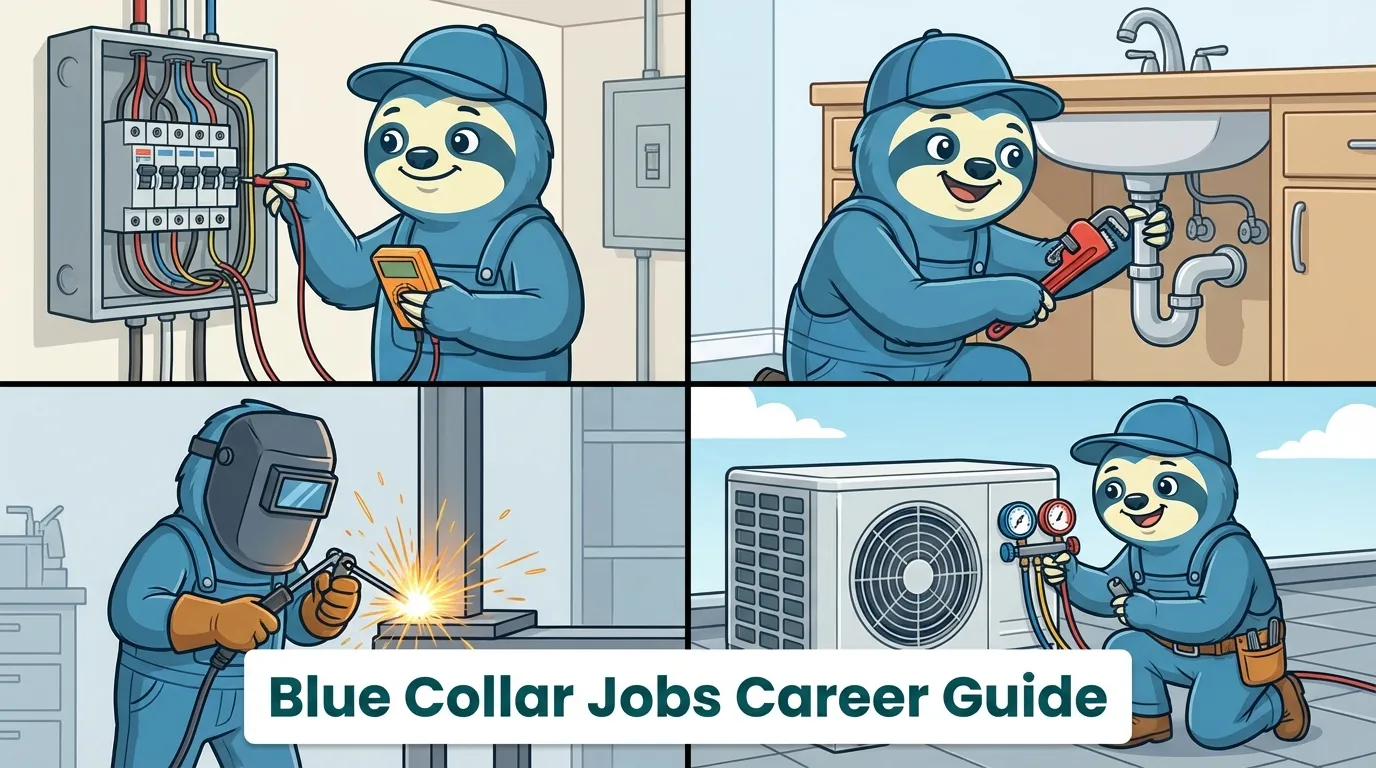
While university graduates navigate student debt and saturated job markets, skilled tradespeople across North America are booking out weeks in advance and earning six figures. The irony is hard to miss.
The "university or bust" mentality convinced an entire generation to avoid the trades - creating a massive shortage of skilled workers and unprecedented opportunity for those willing to work with their hands. Whether you're in Canada or the US, the math has never been more favourable for those entering skilled work.
Whether you're a high school student weighing your options, a mid-career professional considering a change, or someone who's always been curious about the trades, this guide covers everything you need to know about blue collar careers in 2026 - on both sides of the border.
The Blue Collar Renaissance
Let's address the elephant in the room: the stigma around blue collar work is outdated, and the numbers prove it.
The income comparison most people get wrong:
| Factor | Average University Graduate (5 yrs post-grad) | Average Journeyman Tradesperson (5 yrs post-cert) |
|---|---|---|
| Student debt | $28,000 - $100,000+ | $0 |
| Years to first real paycheque | 4 - 6 | 0 (earn during apprenticeship) |
| Average annual income | $52,000 - $68,000 | $72,000 - $95,000 |
| Cumulative earnings by age 28 | ~$180,000 | ~$350,000+ |
| Job security | Variable (depends on field) | Very high (shortage-driven) |
That cumulative earnings gap is staggering. While a university student spends 4 years paying tuition and not earning, an apprentice spends those same 4 years earning $38,000-$65,000 per year while learning. By the time the grad starts their career, the tradesperson has a decade of earnings and zero debt.
And the satisfaction factor is real. Trades consistently rank among the highest for job satisfaction. There's something deeply rewarding about building, fixing, and creating tangible things - about driving past a building you wired, or knowing the family down the street has heat because of your work.
The blue collar renaissance isn't coming. It's already here.
Blue Collar vs White Collar: The Honest Comparison
The blue collar vs white collar debate deserves nuance. Both paths have legitimate advantages and trade-offs.
| Factor | Blue Collar | White Collar |
|---|---|---|
| Education cost | $0 - $15,000 (trade school) | $40,000 - $120,000+ (university/college) |
| Time to earning | Immediate (apprenticeship) | 4 - 6 years |
| Student debt | None or minimal | $28,000 - $100,000+ average |
| Job security | Very high (shortage-driven) | Variable (industry-dependent) |
| Physical demand | High | Low |
| Office politics | Minimal | Common |
| Income ceiling | Very high (ownership path) | Variable (corporate ladder) |
| Schedule flexibility | Variable (project-dependent) | Moderate (corporate hours) |
| Remote work | Rare | Common in many fields |
| AI/Automation risk | Very low | Moderate to high |
| Career longevity | 25-35 years hands-on, then supervisory | 35-40+ years |
Neither path is universally "better." But if you're someone who dislikes sitting at a desk, learns best by doing, wants to avoid debt, and values tangible results from your work - the trades deserve serious consideration.
Part 1: Blue Collar Careers in Canada
Canada is in the middle of a skilled trades crisis. BuildForce Canada projects that over 300,000 construction workers will retire by 2032, and the pipeline of new workers isn't keeping up. The Canadian Apprenticeship Forum reports that only 1 in 5 apprenticeship positions gets filled. Infrastructure projects, housing demands, and green energy transitions are all intensifying the shortage.
What does this mean for Canadian workers? Supply and demand works in your favour.
Highest Paying Blue Collar Jobs in Canada
Not all trades pay equally. Here's how salaries stack up across Canada in 2026, broken into tiers based on what journeymen and experienced workers typically earn.
Tier 1: $80,000 - $150,000+
These are the trades where experienced workers regularly clear six figures.
| Trade | Typical Salary Range (CAD) | What Drives the Pay |
|---|---|---|
| Elevator Technician | $90,000 - $135,000+ | Specialized skills, licensing requirements, safety-critical work |
| Electrical Lineworker | $85,000 - $140,000 | Hazardous conditions, overtime, remote postings |
| Boilermaker | $80,000 - $120,000 | Industrial demand, shutdown work, harsh conditions |
| Crane Operator | $75,000 - $115,000 | Certification requirements, infrastructure boom |
| Industrial Mechanic/Millwright | $75,000 - $105,000 | Manufacturing, mining, and energy sector demand |
| Steamfitter/Pipefitter | $78,000 - $110,000 | Industrial projects, Red Seal premium |
Tier 2: $60,000 - $95,000
The "bread and butter" trades - high demand, solid pay, and the clearest paths to business ownership.
| Trade | Typical Salary Range (CAD) | What Drives the Pay |
|---|---|---|
| Electrician | $65,000 - $100,000 | Specialization, overtime, commercial/industrial work |
| Plumber | $62,000 - $95,000 | Residential and commercial demand, emergency work |
| HVAC Technician | $58,000 - $92,000 | Year-round demand, refrigerant certifications |
| Welder | $55,000 - $95,000 | Wide range based on specialization (pipeline welders earn top dollar) |
| Heavy Equipment Operator | $60,000 - $90,000 | Resource sector, infrastructure projects |
For a deep dive into electrical trade salaries specifically, check out our Canadian Electrician Salary Guide - it covers provincial breakdowns, specialization premiums, and union vs non-union earnings.
Tier 3: $40,000 - $75,000
Entry-level friendly trades with lower barriers and solid growth potential, especially for business owners.
| Trade | Typical Salary Range (CAD) | What Drives the Pay |
|---|---|---|
| Carpenter | $48,000 - $78,000 | Framing vs finishing, commercial vs residential |
| Automotive Technician | $42,000 - $75,000 | Dealership vs independent, EV specialization |
| Mason/Bricklayer | $50,000 - $78,000 | Seasonal but high daily rates |
| Painter | $38,000 - $65,000 | Commercial painting pays more, business ownership key |
| Landscaper | $35,000 - $70,000 | Seasonal, but business owners can earn significantly more |
Getting Started in Canada
There are four main routes into a skilled trade in Canada.
Registered Apprenticeships
This is the gold standard in Canada and the most common path into the trades.
How it works: You're employed by a sponsor (employer) and split your time between on-the-job training (about 80%) and in-school technical training (about 20%). Apprenticeships typically last 3-5 years depending on the trade, totalling roughly 5,000 to 9,000 hours.
What you earn: Apprentice wages start at 50-60% of the journeyman rate in your trade and increase with each completed level. A first-year electrical apprentice in Ontario might start at $22-$26/hour, progressing to $32-$38/hour by their final year.
Where to find them:
- Your provincial apprenticeship authority (every province has one)
- Union hiring halls (IBEW, UA, etc.)
- Job boards and trade associations
- Directly approaching contractors and asking
The challenge: Finding a sponsor can be the hardest part. Employers take on risk when sponsoring apprentices, so you may need to start as a helper first and prove yourself.
Pre-Apprenticeship and Trade School Programs
Trade schools and colleges offer pre-apprenticeship programs that give you foundational skills before entering a full apprenticeship.
Duration: 8-16 weeks for pre-apprenticeship programs, 6-12 months for diploma programs.
Cost: $3,000 - $15,000 depending on the program and institution. Much less than university, and many programs qualify for OSAP or provincial student aid.
Best suited for: People changing careers later in life, those who want a structured introduction before committing, and trades where foundational knowledge is critical (electrical, plumbing).
Starting as a Helper or Labourer
No formal education required. Get hired as a general labourer or trade helper - watch, learn, ask questions, and demonstrate your reliability. You'll start at $16-$22/hour doing the grunt work, but you're learning the trade environment and positioning yourself for an apprenticeship.
Military Training
The Canadian Armed Forces trains personnel in numerous trades that transfer directly to civilian careers. Veterans can access education benefits for additional trade school training, and trade qualifications earned in the military are increasingly recognized by provincial apprenticeship authorities.
Certifications in Canada
The Red Seal: The gold standard for Canadian tradespeople. The Red Seal (Interprovincial Standards) is a nationally recognized certification that proves you meet a high standard of competency in your trade. It allows you to work in any province or territory without rewriting exams, is valued by employers, and typically results in higher pay. It's earned by passing a standardized exam after completing your apprenticeship.
Trade-specific certifications:
- Provincial journeyman certificates (required for most regulated trades)
- ODP/TSSA certification (HVAC refrigerant handling)
- CWB certification (structural welding)
- Provincial gas fitter licenses
Trade-by-Trade Breakdown (Canada)
Electrical: 4-5 year apprenticeship (approximately 9,000 hours). Provincial certification exam, then optional Red Seal. Salary progression: Apprentice $38,000-$68,000 → Journeyman $72,000-$100,000 → Master Electrician $90,000-$130,000 → Business Owner $80,000-$200,000+. Hot specializations include renewable energy, EV charging infrastructure, and industrial automation.
Plumbing: 4-5 year apprenticeship with provincial journeyman certification and Red Seal available. Salary progression: Apprentice $36,000-$62,000 → Journeyman $65,000-$95,000 → Master Plumber $85,000-$115,000 → Business Owner $80,000-$200,000+. Emergency service calls command premium rates, making plumbing one of the most recession-resistant trades.
HVAC: 3-5 year apprenticeship. ODP/TSSA refrigerant handling certification required. Red Seal available. Salary progression: Apprentice $34,000-$58,000 → Journeyman $58,000-$92,000 → Specialist $75,000-$110,000 → Business Owner $70,000-$180,000+. Heat pumps are booming thanks to government incentives. If you're considering starting an HVAC business, our guide on why HVAC businesses fail covers the critical mistakes to avoid.
Welding: Trade school (6-12 months) or 3-4 year apprenticeship. CWB certification for structural work, Red Seal available. Salary progression: Entry-level $38,000-$52,000 → Journeyman $55,000-$80,000 → Pipeline/Underwater $80,000-$150,000+ → Inspector $75,000-$110,000. A pipeline welder doing shutdowns in northern Alberta can earn $150,000+ in a good year.
Carpentry: The most accessible trade. Red Seal available. Many carpenters are self-taught or started as helpers.
Heavy Equipment Operator: Pays well especially on resource projects in Alberta, BC, and the territories.
Resources for Getting Started in Canada
Provincial Apprenticeship Authorities:
- Ontario - Skilled Trades Ontario
- British Columbia - SkilledTradesBC (formerly ITA)
- Alberta - Alberta Apprenticeship and Industry Training
- Quebec - Emploi-Quebec
- Other provinces - Search "[province name] apprenticeship authority"
National Resources:
- Red Seal Program (red-seal.ca) - Interprovincial standards and exam information
- Canadian Apprenticeship Forum - Research and advocacy
- Skills Canada - Competitions and career exploration
- BuildForce Canada - Labour market data and projections
Women in Trades (Canada):
- Canadian Apprenticeship Forum - Research and advocacy for apprenticeship training
- Women Building Futures (Alberta) - Training and support for women entering trades
- Compagnons du Devoir (Quebec) - Skilled trades training with growing inclusion focus
- Provincial women-in-trades programs - Most provinces offer specific funding and support
Part 2: Blue Collar Careers in the US
The United States is facing its own skilled trades crisis. The Bureau of Labor Statistics projects over 600,000 new construction jobs needed by 2032, while Associated Builders and Contractors estimates the industry needs to attract roughly 500,000 additional workers annually on top of normal hiring. The average age of a skilled tradesperson in the US is rising, and retirements are outpacing new entrants across virtually every trade.
What does this mean for American workers? The leverage has shifted firmly in your favour.
Highest Paying Blue Collar Jobs in the US
Here's how salaries stack up across the US in 2026, broken into tiers based on what journeymen and experienced workers typically earn. Salaries vary significantly by state - coastal metro areas and union-heavy states (New York, California, Illinois) pay the most.
Tier 1: $80,000 - $150,000+
These are the trades where experienced workers regularly clear six figures.
| Trade | Typical Salary Range (USD) | What Drives the Pay |
|---|---|---|
| Elevator Technician | $88,000 - $130,000+ | Specialized skills, NEIEP training, safety-critical work |
| Electrical Lineworker | $82,000 - $140,000 | Hazardous conditions, overtime, storm response |
| Boilermaker | $78,000 - $118,000 | Industrial demand, shutdown work, harsh conditions |
| Crane Operator | $72,000 - $110,000 | NCCCO certification, infrastructure boom |
| Industrial Mechanic/Millwright | $70,000 - $100,000 | Manufacturing reshoring, energy sector demand |
| Steamfitter/Pipefitter | $75,000 - $108,000 | Industrial projects, union scale |
Tier 2: $55,000 - $95,000
The "bread and butter" trades - high demand, solid pay, and the clearest paths to business ownership.
| Trade | Typical Salary Range (USD) | What Drives the Pay |
|---|---|---|
| Electrician | $60,000 - $100,000 | Specialization, overtime, commercial/industrial work |
| Plumber | $58,000 - $95,000 | Residential and commercial demand, emergency work |
| HVAC Technician | $52,000 - $90,000 | Year-round demand, EPA certifications |
| Welder | $48,000 - $95,000 | Wide range based on specialization (pipeline welders earn top dollar) |
| Heavy Equipment Operator | $55,000 - $88,000 | Infrastructure projects, resource extraction |
Tier 3: $35,000 - $72,000
Entry-level friendly trades with lower barriers and solid growth potential, especially for business owners.
| Trade | Typical Salary Range (USD) | What Drives the Pay |
|---|---|---|
| Carpenter | $45,000 - $75,000 | Framing vs finishing, commercial vs residential |
| Automotive Technician | $40,000 - $72,000 | Dealership vs independent, EV specialization (ASE certification) |
| Mason/Bricklayer | $48,000 - $75,000 | Seasonal but high daily rates |
| Painter | $35,000 - $62,000 | Commercial painting pays more, business ownership key |
| Landscaper | $32,000 - $65,000 | Seasonal, but business owners can earn significantly more |
Getting Started in the US
There are four main routes into a skilled trade in the US.
Registered Apprenticeships
The US Department of Labor oversees registered apprenticeship programs, which are the most structured path into the trades.
How it works: Same as in Canada - you're employed by a sponsor and split your time between on-the-job training and classroom instruction. Apprenticeships typically last 3-5 years depending on the trade, totalling 2,000 to 8,000+ hours.
What you earn: Apprentice wages start at 50-60% of the journeyman rate. A first-year electrical apprentice might start at $18-$24/hour, progressing to $28-$36/hour by their final year.
Where to find them:
- ApprenticeshipUSA (apprenticeship.gov) - the federal program directory
- Your state's apprenticeship agency
- Union hiring halls (IBEW, UA, etc.)
- Job boards and trade associations
- Directly approaching contractors and asking
The challenge: Same as in Canada - finding a sponsor can be tough. Starting as a helper to prove yourself is a common strategy.
Trade School and Community College Programs
Community colleges and vocational schools across the US offer trade programs that give you foundational skills.
Duration: 8-16 weeks for certificate programs, 1-2 years for associate degrees.
Cost: $3,000 - $15,000 for certificate programs; community college tuition is often much lower. Many programs qualify for Pell Grants and federal student aid.
Best suited for: People changing careers later in life, those who want a structured introduction before committing, and trades where foundational knowledge is critical.
Starting as a Helper or Labourer
No formal education required. Get hired as a general labourer or trade helper - watch, learn, ask questions, and demonstrate your reliability. You'll start at $15-$22/hour doing the grunt work, but you're learning the trade environment and positioning yourself for an apprenticeship.
Military Training
The US military trains personnel in numerous trades that transfer directly to civilian careers. The GI Bill covers trade school tuition and living expenses. Programs like Helmets to Hardhats connect veterans directly with union apprenticeship programs. Many states offer expedited licensing for veterans with military trade experience.
Certifications in the US
Unlike Canada's unified Red Seal system, the US has a patchwork of state and national certifications. Here's what matters:
National certifications:
- OSHA 10/30 Safety Cards - Required on most job sites
- EPA Section 608 - Required for HVAC refrigerant handling
- AWS (American Welding Society) - Welding certifications
- ASE (Automotive Service Excellence) - Auto technician certification
- NCCCO - Crane operator certification
State-level licensing:
- Most states require journeyman and/or master licenses for electrical, plumbing, and HVAC work
- Requirements vary significantly - some states have statewide licenses, others are county or city-based
- Always check your state's requirements before starting a trade
The key difference from Canada: There's no single interprovincial-style certification in the US. Moving between states may require additional testing or license reciprocity applications. Some states have reciprocity agreements with neighbours, but it's not universal.
Trade-by-Trade Breakdown (US)
Electrical: 4-5 year apprenticeship (approximately 8,000 hours). State journeyman license required - requirements vary by state. Salary progression: Apprentice $36,000-$65,000 → Journeyman $68,000-$100,000 → Master Electrician $85,000-$125,000 → Business Owner $80,000-$200,000+. Hot specializations include EV charging infrastructure, data centres, renewable energy, and industrial automation.
Plumbing: 4-5 year apprenticeship. Most states require a master plumber license for independent work. Salary progression: Apprentice $34,000-$58,000 → Journeyman $60,000-$92,000 → Master Plumber $80,000-$112,000 → Business Owner $80,000-$200,000+. Emergency service calls command premium rates, making plumbing one of the most recession-resistant trades.
HVAC: 3-5 year apprenticeship. EPA Section 608 certification required for refrigerant handling. State licensing varies. Salary progression: Apprentice $32,000-$55,000 → Journeyman $52,000-$88,000 → Specialist $70,000-$105,000 → Business Owner $70,000-$180,000+. Heat pumps and energy efficiency incentives (including IRA tax credits) are driving massive demand. If you're considering starting an HVAC business, our guide on why HVAC businesses fail covers the critical mistakes to avoid.
Welding: Trade school (6-12 months) or 3-4 year apprenticeship. AWS certification is the industry standard. Salary progression: Entry-level $36,000-$50,000 → Journeyman $50,000-$78,000 → Pipeline/Underwater $80,000-$150,000+ → Inspector $72,000-$108,000. Pipeline work in Texas, North Dakota, and other energy states commands top dollar.
Carpentry: The most accessible trade. Licensing requirements vary by state - some don't require one at all. Many carpenters are self-taught or started as helpers.
Heavy Equipment Operator: Pays well especially in states like Texas, North Dakota, Alaska, and anywhere with major infrastructure projects. NCCCO certification is widely recognized.
Resources for Getting Started in the US
Federal Resources:
- ApprenticeshipUSA (apprenticeship.gov) - Find registered apprenticeship programs
- Bureau of Labor Statistics Occupational Outlook Handbook - Salary and job outlook data
- Helmets to Hardhats - Connects military veterans to union apprenticeships
- Job Corps - Free career training for ages 16-24
State Apprenticeship Agencies:
- Every state has an apprenticeship agency - search "[your state] apprenticeship agency"
- Some states (California, New York, Ohio, etc.) have their own apprenticeship standards in addition to federal programs
Women in Trades (US):
- Nontraditional Employment for Women (NEW) - Training and placement for women in trades
- NABTU Tradeswomen Build Nations - North America's largest conference for tradeswomen
- Women in HVACR - Industry-specific support and scholarships
- State-level pre-apprenticeship programs - Many states fund women-in-trades initiatives
What Both Countries Share
The following sections apply equally whether you're in Canada or the US. The trades are remarkably similar across the border - the work, the culture, the challenges, and the opportunities.
Union vs Non-Union: Making the Choice
This is one of the most debated topics in the trades, and both sides have valid points. Many of the major trade unions - IBEW, UA, UBC, IUOE - operate in both the US and Canada.
| Factor | Union | Non-Union |
|---|---|---|
| Wages | 10-20% higher on average | Market-rate, negotiable |
| Benefits | Comprehensive (health, dental, pension) | Varies by employer |
| Pension/Retirement | Defined benefit plan (typically) | 401(k)/RRSP matching if offered |
| Job security | Stronger protections | At-will employment |
| Training | Excellent apprenticeship programs | Quality varies |
| Work availability | Dispatched from hall | Consistent with one employer |
| Advancement speed | Seniority-based | Merit-based, potentially faster |
| Geographic flexibility | May need to travel for work | Usually local |
| Starting a business | More complex (labour relations) | Easier transition |
The honest answer: If you value stability, benefits, and pension - go union. If you value flexibility, entrepreneurship, and rapid advancement - non-union might suit you better. Many tradespeople work both sides throughout their career.
Physical Demands and Career Longevity
Let's be real: blue collar work is physical, and your body keeps score. Understanding this upfront helps you make smart decisions about your career.
Trades ranked by physical demand (highest to lowest):
- Roofing - Heat, heights, heavy materials, kneeling constantly
- Masonry/Bricklaying - Repetitive heavy lifting, awkward positions
- Concrete work - Heavy, time-pressured, hard on knees and back
- Framing carpentry - Heavy lifting, heights, all-weather work
- Plumbing - Tight spaces, crawling, awkward body positions
- HVAC - Rooftops, crawl spaces, heavy equipment
- Electrical - Moderate physical demand, mostly standing and reaching
- Instrumentation/Controls - Lighter physical work, more technical
Protecting Your Long-Term Health
The tradespeople who last 30+ years in the field share common habits:
- Invest in quality gear. Good boots, knee pads, and back supports aren't optional - they're career insurance.
- Lift properly. Every single time. The one time you don't is the time that ends your career.
- Stay in shape outside of work. Core strength and flexibility prevent injuries. Many veteran tradespeople swear by yoga or stretching routines.
- Protect your hearing and lungs. Hearing loss and respiratory issues are the silent career killers. Wear your PPE.
- Know when to transition. Moving into supervisory, estimating, inspecting, or business management roles in your 40s or 50s extends your earning years without destroying your body.
From Employee to Business Owner
The ultimate blue collar career path - and the one with the highest income ceiling. This is true on both sides of the border.
The math is compelling:
| Role | Annual Income | Notes |
|---|---|---|
| Journeyman employee | $72,000 - $100,000 | Solid and stable |
| Journeyman with side jobs | $85,000 - $120,000 | Evenings and weekends |
| Solo operator (own business) | $90,000 - $150,000 | All revenue, all risk |
| Business owner (1-3 employees) | $100,000 - $200,000 | Leverage other people's labour |
| Business owner (5+ employees) | $150,000 - $400,000+ | Running a real company |
When to make the leap: Most successful trade business owners waited until they had 5-10 years of experience, a solid client base, enough savings for 3-6 months of expenses, and a basic understanding of business operations - pricing, estimating, scheduling, and client management.
The skills that make you a great technician (attention to detail, problem-solving, reliability) are necessary but not sufficient for running a business. You also need to learn how to price jobs profitably, manage your schedule, handle client communication, send professional estimates and invoices, and track your finances.
If you want to test the entrepreneurial waters before going all-in on a specialized trade business, a handyman business is one of the most accessible entry points - lower startup costs, less regulation, and a great way to build business skills.
The good news? Modern field service management tools make the business side much more manageable than it used to be.
Blue Collar Careers for Women
Women make up roughly 4-5% of the skilled trades workforce in both the US and Canada. That number is growing, but slowly. Here's the honest picture.
The trades shortage means employers are actively recruiting women. Support programs exist in both countries - from NABTU's Tradeswomen Build Nations initiative in the US to Women Building Futures in Canada.
Trades with growing female representation:
- Electrical (highest growth rate for women in trades)
- Carpentry and cabinetmaking
- HVAC (especially on the commercial and controls side)
- Painting and decorating
- Landscaping and horticulture
Breaking into a male-dominated field comes with real challenges - from finding properly fitted PPE to navigating job site culture. The women who succeed consistently cite three factors:
- Competence speaks loudest. Do excellent work and let your skills do the talking. Respect follows results.
- Find your people. Connect with other women in trades through organizations and support networks. Having a community makes a significant difference.
- Choose your employer carefully. Company culture matters enormously. Larger companies and union shops typically have better policies and more diverse workforces. Don't tolerate a toxic workplace when there's a trades shortage - you have options.
The Future of Blue Collar Work
If you're choosing a career path today, you want to know where things are heading in 10-20 years. The outlook for skilled trades is overwhelmingly positive in both the US and Canada.
Technology is a tool, not a threat. Unlike many white collar jobs, skilled trades are remarkably resilient to automation. AI can write code and analyze data, but it can't crawl through a basement to fix a leaking pipe or troubleshoot why a commercial HVAC system is short-cycling. Technology is making tradespeople more productive, not replacing them.
Green energy is creating new specializations. Net-zero commitments on both sides of the border are driving enormous demand for heat pump installers, solar panel and EV charger installers, energy auditors, building envelope specialists, and wind turbine technicians.
Trades that are growing fastest:
- Electricians - EV infrastructure, renewable energy, data centres
- HVAC technicians - Heat pumps, building automation, indoor air quality
- Plumbers - Housing demand, water efficiency systems
- Millwrights/Industrial mechanics - Manufacturing reshoring, automation maintenance
- Heavy equipment operators - Infrastructure spending, resource projects
Getting Started: Your First Steps This Week
If you've read this far and you're interested, here are concrete actions you can take right now - regardless of which country you're in.
Step 1: Research your options (Today) In the US, visit apprenticeship.gov to explore registered programs. In Canada, visit your provincial apprenticeship authority's website. Browse the list of designated trades and see what appeals to you.
Step 2: Talk to real tradespeople (This week) Reach out to anyone you know in the trades. Ask them honestly about their work, their income, and what they wish they'd known when starting. Most tradespeople are happy to talk about their careers - it's a proud profession.
Step 3: Shadow or volunteer (This month) Ask a contractor if you can shadow them for a day. Many are willing, especially if you express genuine interest. One day on a job site tells you more than any career guide.
Step 4: Explore training programs (This month) Contact local community colleges (US) or colleges and trade schools (Canada) about pre-apprenticeship programs. Contact your local union halls - many host information sessions and open houses for prospective apprentices.
Step 5: Apply for positions (Ongoing) Look for labourer, helper, or apprentice positions in trades that interest you. Be persistent - finding your first opportunity can take time. Apply broadly, show up on time, work hard, and the right opportunity will come.
Union Halls (US and Canada)
These international unions operate on both sides of the border:
- IBEW (International Brotherhood of Electrical Workers) - Electricians
- UA (United Association) - Plumbers and pipefitters
- Carpenters' Union (UBC) - Carpenters and allied trades
- IUOE (International Union of Operating Engineers) - Equipment operators
The Bottom Line
Blue collar work isn't a fallback plan. It's a legitimate, often lucrative career path that offers something increasingly rare in the modern economy: high pay, genuine job security, no student debt, and work that actually matters.
The US and Canada collectively need over a million skilled tradespeople over the next decade. The shortage is real, the pay is good, and the path is clear. You can start earning while you train, build toward certifications recognized across your country, and eventually run your own business if that's your ambition.
The question isn't whether blue collar careers are worth it. The numbers have settled that debate. The question is whether you're ready to get started.
Building a trade business? Managing clients, scheduling jobs, sending estimates and invoices, and keeping your operations organized shouldn't be harder than the work itself. WorkZen gives you scheduling, invoicing, client management, and lead tracking built for service businesses. Start with the free-forever plan and scale when you're ready.
Frequently Asked Questions
Ready to transform your field service business?
Start using WorkZen today - it's free to get started!