Which Home Services Are Recession-Proof? (And Which Get Hit First)
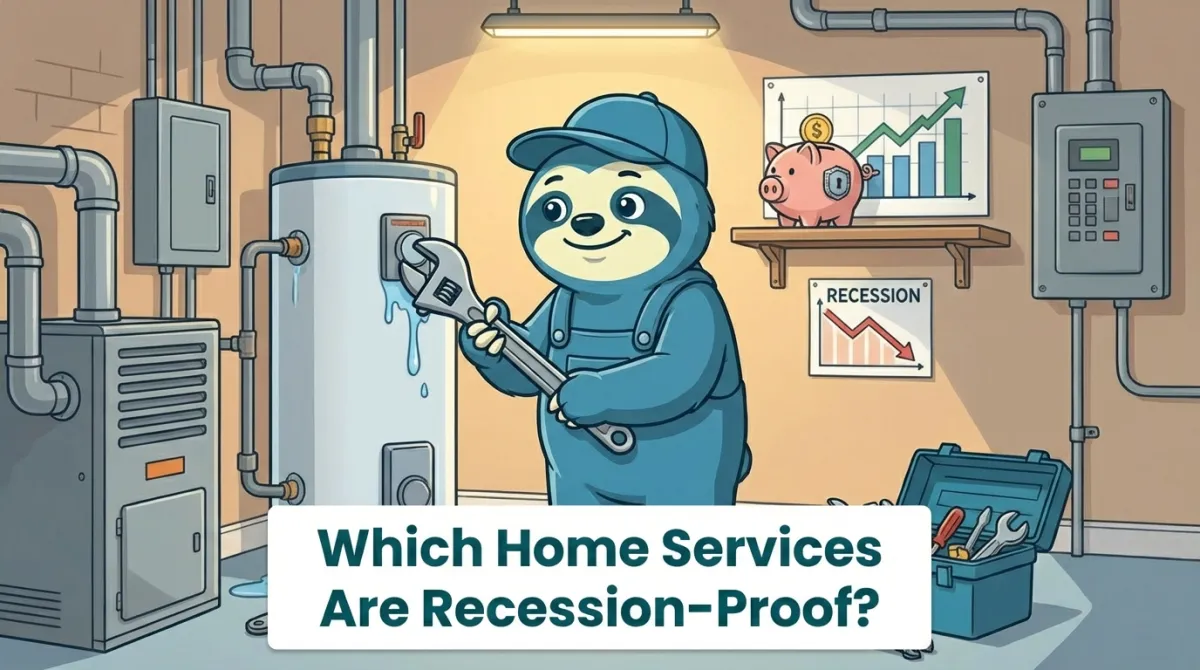
A burst pipe doesn't check the stock market before flooding your basement. A dead furnace in January doesn't wait for GDP numbers. And the rats in your crawl space have zero interest in consumer confidence indices.
But the homeowner deciding whether to repaint the living room? They'll check their bank account first. That new backyard patio? Suddenly it can wait another year. Maybe two.
This is the fundamental truth about recessions and home services: not all trades bleed equally. Some businesses barely notice an economic downturn. Others feel it like a gut punch the moment consumer confidence dips.
If you run a home service business, knowing where your trade falls on the recession-resilience spectrum isn't just interesting trivia. It's strategic intelligence that should shape how you build your company, diversify your services, and plan your finances.
So let's rank them.
How We Ranked These
We didn't pull this ranking out of thin air. Here's the framework:
Four criteria, weighted by impact:
-
Necessity score - Can the homeowner realistically delay this service? A clogged sewer line is a today problem. A fresh coat of paint on the deck is a "maybe next spring" problem.
-
Regulatory and safety requirements - Does skipping this service create code violations, insurance issues, or health hazards? Services tied to safety codes are harder to postpone.
-
Emergency frequency - What percentage of the business comes from emergencies versus planned projects? Emergency-driven trades are inherently more recession-resistant because emergencies don't care about the economy.
-
Historical performance - What actually happened to these industries during the 2008-2009 Great Recession and the 2020 COVID downturn? Real data beats theory.
The result is a three-tier system. Tier 1 businesses barely flinch during downturns. Tier 3 businesses start feeling pressure before the recession is even officially declared.
Let's get into it.
Tier 1: Recession-Resistant (Essential Services People Cannot Skip)
These are the trades where demand holds steady - or even increases - when the economy tightens. The common thread: these services address immediate, non-deferrable needs tied to health, safety, or basic habitability.
Plumbing
Why it's recession-proof: Water doesn't care about your mortgage payment. A burst pipe, a backed-up sewer, a broken water heater - these are emergencies that demand immediate attention regardless of what the economy is doing.
During the 2008 recession, plumbing businesses focused on repair and maintenance saw revenue declines of only 5-8%. New construction plumbing took a hit (naturally, since new housing starts collapsed), but service and repair work held firm.
There's also a counterintuitive boost: when homeowners can't afford to move, they fix what they have. That aging water heater they planned to ignore until they sold the house? Now it needs to last another five years. That means more maintenance calls, more repairs, more revenue for service-focused plumbers.
Electrical
Why it's recession-proof: Electrical problems are safety hazards and code violations. A flickering breaker panel isn't something you ignore. A tripped GFCI outlet in the bathroom isn't optional to fix.
Insurance companies and home inspectors don't give recession discounts on safety requirements. If anything, during downturns more homeowners turn to upgrades that save money on utility bills - LED conversions, panel upgrades for efficiency, smart thermostat installations.
Electrical contractors who positioned themselves around energy efficiency and safety actually grew during 2008-2009. The ones who relied primarily on new construction suffered alongside the housing market.
HVAC
Why it's recession-proof (mostly): Heating in winter is non-negotiable in most of North America. Your furnace dies in February in Minnesota? You're calling someone that day. AC is slightly more discretionary - people will suffer through a hot summer before they'll freeze through a cold winter - but in southern states, it's equally essential.
The split matters here. HVAC repair and maintenance is firmly Tier 1. HVAC installation and replacement is closer to Tier 2 during severe downturns, as homeowners stretch the life of existing systems.
During the 2020 downturn, HVAC businesses with strong maintenance contract bases reported almost zero revenue impact. Those relying on system replacements saw 15-20% declines. The lesson is clear: recurring maintenance revenue is the buffer that keeps HVAC businesses in Tier 1 territory.
Pest Control
Why it's recession-proof: Termites, rodents, and bedbugs are health hazards and property destroyers. Most pest control revenue comes from recurring contracts - monthly or quarterly treatments that homeowners are reluctant to cancel because the consequences are expensive and disgusting.
Pest control is also one of the few home services where cancellation has a visible, rapid downside. Skip your lawn service for a month and the grass gets tall. Skip pest control for a month and you might have a rodent colony in your attic.
The industry saw only a 3-5% revenue decline during the 2008 recession, making it one of the most stable home service sectors. The contract-based model is the key. When 70-80% of your revenue is recurring, individual economic decisions barely move the needle.
Locksmith
Why it's recession-proof: Locksmith work is almost entirely emergency-driven. People lock themselves out. Locks break. Businesses need rekeying after employee turnover (which actually increases during recessions). Break-ins go up during economic downturns, driving demand for lock replacement and security upgrades.
It's a small market compared to plumbing or HVAC, but it's remarkably stable. The average locksmith call is also relatively inexpensive, meaning it falls below the threshold where homeowners agonize over the cost.
Appliance Repair
Why it's recession-proof (and then some): This one is fascinating because appliance repair doesn't just survive recessions - it often thrives during them.
The logic is simple: when money is tight, people repair instead of replace. That washing machine making a grinding noise? In a good economy, you might just buy a new one. In a recession, you call the repair tech.
During 2008-2009, appliance repair businesses reported revenue increases of 10-15% while appliance retailers saw dramatic declines. The same pattern repeated during the 2020 downturn. It's one of the clearest "recession winner" categories in home services.
If you're in appliance repair, an economic downturn might actually be your best growth period. Plan accordingly.
Tier 2: Moderate Impact (Delayed but Not Eliminated)
These trades feel the pressure, but the work doesn't disappear entirely. Emergency and maintenance work continues. Planned projects slow down. Revenue typically dips 15-25% during moderate recessions.
Roofing
The split: Emergency roof repairs (leaks, storm damage) remain steady because water pouring into your living room is not something you postpone. Insurance-covered work also holds up since claims get processed regardless of the economy.
What slows down: full roof replacements, cosmetic upgrades, and proactive re-roofing. Homeowners who know their roof has "a few more years left" will push it to the limit during a downturn.
During 2008, roofing businesses with a mix of insurance restoration work and emergency repair fared far better than those focused primarily on re-roofing. The takeaway: diversify your roofing revenue streams.
Handyman Services
The counterintuitive category: Handyman work is interesting because it can actually benefit from recessions in certain ways. When homeowners can't afford specialists, they call a handyman. When DIY projects go wrong (and they go more wrong when people are trying to save money by doing things themselves), the handyman gets the call.
Small, affordable fixes tend to hold steady. Larger renovation-style handyman projects slow down. The net effect is moderate - maybe a 10-15% decline, softened by the uptick in "fix what we have" mentality.
Garage Door Services
The split: Garage door springs break without consulting economic forecasts. Opener malfunctions don't wait for bull markets. Emergency repair work stays consistent.
What drops: new door installations, cosmetic upgrades, and smart garage door conversions. These are deferrable purchases that homeowners will postpone when budgets tighten. Expect a 15-20% overall revenue decline, with repair work holding steady and installation work taking most of the hit.
Gutter Services
Maintenance continues, installations slow: Gutter cleaning is relatively recession-resistant because clogged gutters cause water damage, and water damage is expensive. Most homeowners understand this math.
New gutter installation and gutter guard upgrades are more discretionary. They slow significantly during downturns. If your business is split between cleaning/maintenance and installation, expect the installation side to carry most of the revenue decline.
General Cleaning
Commercial holds, residential fluctuates: Commercial cleaning contracts tend to be stable because businesses need clean workspaces for employees and code compliance. These contracts renew on schedule regardless of economic conditions.
Residential cleaning is more volatile. It's often one of the first household expenses to get cut when budgets tighten. During 2008, residential cleaning services reported 20-30% revenue declines while commercial cleaning held within 5-10%. If your cleaning business is heavily residential, consider building out your commercial client base as a recession hedge.
Tier 3: Discretionary (First to Get Cut)
These are the services homeowners view as "nice to have" rather than "need to have." When budgets tighten, these are the first calls that don't get made. Revenue declines of 25-50% are common during significant downturns.
Painting (Interior and Exterior)
The poster child for discretionary home services. Fresh paint is aesthetic. It makes your home look nice. It does not prevent your home from functioning. This makes it one of the easiest expenses for homeowners to postpone.
During the 2008 recession, residential painting businesses saw revenue declines averaging 35-40%. Interior painting held up slightly better than exterior (people spend more time inside, so they notice it more), but both categories were hit hard.
The exception: painting tied to property sales or rental turnover. Real estate activity slows during recessions, but it doesn't stop entirely, and properties that do sell still need to be painted.
Landscaping
Maintenance survives, design and installation evaporates: If you're mowing lawns on a weekly contract, you'll feel the recession but survive it. Some clients will cancel, but most understand that a completely neglected yard creates HOA issues, reduces property value, and becomes a bigger problem later.
But landscape design? New patios? Outdoor kitchens? Retaining walls? These are among the first projects to get shelved when the economy tightens. During 2008, landscape installation companies saw revenue drops of 40-50% while maintenance-focused operations dipped only 10-15%.
The divide between maintenance and installation is the entire story for landscaping during a recession.
Pool Maintenance and Services
Existing pools need service; new pools don't get built. If you already have a pool, you need to maintain it - algae, chemical balance, and equipment don't take economic holidays. Pool maintenance contracts are moderately recession-resistant for this reason.
Pool installation, renovation, and remodeling? Nearly zero during severe downturns. The 2008 recession saw new pool installations drop by over 50% in most markets. If your business relies heavily on new builds, a recession will hit you hard.
Pressure Washing
Purely aesthetic, easy to skip. Pressure washing is the definition of a discretionary service. A dirty driveway is an eyesore, not an emergency. A grimy deck is annoying, not dangerous.
Revenue declines of 30-40% are typical during recessions. The work that survives is usually commercial (restaurants, retail storefronts) or tied to property sales. Residential vanity pressure washing evaporates almost immediately.
Carpet Cleaning
Easy to postpone indefinitely. When money is tight, homeowners vacuum more aggressively and live with the stains. Professional carpet cleaning is one of the most deferrable home services on the market.
The exception is move-in/move-out cleaning tied to rentals and real estate, which slows but doesn't stop. Commercial carpet cleaning (offices, hotels) holds up better than residential.
Junk Removal
Counterintuitively weak during recessions. You'd think people would still have junk to remove, and they do. But during downturns, people hold onto things longer ("we might need that someday"), moving activity decreases (less move-out cleanouts), and the $300-$500 cost of a junk removal job becomes harder to justify.
Foreclosure cleanouts partially offset this in severe housing downturns, but overall, the industry typically sees 20-30% revenue declines during recessions.
How to Move Your Business Up a Tier
If your trade landed in Tier 2 or Tier 3, don't panic. The tier rankings reflect industry averages, and individual businesses can perform far better than their industry by making strategic moves before a downturn hits.
Here's how to climb.
1. Add Maintenance Contracts and Recurring Revenue
This is the single most powerful recession-proofing strategy across every trade.
The math: A business with 40% recurring revenue from maintenance contracts will weather a recession dramatically better than one with 100% project-based income. Contracts provide predictable cash flow, keep you connected to clients, and create natural upsell opportunities.
- Painters: Offer annual touch-up and maintenance contracts for commercial properties
- Landscapers: Build your maintenance base aggressively before project work slows
- Pressure washers: Bundle quarterly cleaning contracts for driveways, decks, and building exteriors
- Pool services: If you're installation-heavy, shift resources toward maintenance
Use tools that make managing recurring work easy. Scheduling software that handles recurring appointments and automated reminders keeps maintenance programs running smoothly without creating admin headaches.
2. Pivot Toward Repair and Essential Work
When people stop buying new things, they start fixing old things. Position your business to capture that shift.
- Painters: Add drywall repair, water damage restoration, and mold remediation services
- Landscapers: Add drainage solutions, erosion control, and irrigation repair - these prevent property damage and are harder to defer
- Carpet cleaners: Add water extraction and flood damage cleanup
- Junk removal: Partner with property management companies and REO (bank-owned) property services
3. Diversify Your Service Offerings
The businesses that survive recessions best are the ones that don't rely on a single revenue stream.
Consider adding complementary services that are more recession-resistant than your core offering. A painting company that also does minor drywall work, caulking, and weatherproofing has more recession cushion than one that only paints. A landscaper who adds snow removal (in applicable climates) creates year-round stability and recession resilience simultaneously.
4. Build Your Commercial Client Base
Commercial clients tend to honor contracts more consistently than residential clients during downturns. They also tend to be repeat buyers with longer relationships and larger job values.
If you're primarily residential, start cultivating commercial relationships now. Property management companies, HOAs, and real estate offices are excellent starting points.
5. Lock In Prices and Relationships Before the Downturn
When the economy is strong, clients aren't price-shopping as aggressively. Use this window to lock in multi-year agreements, build deep client relationships, and establish yourself as the default provider who clients won't bother replacing.
A client who's been with you for three years and trusts your work is far less likely to cancel during a recession than one you just signed last month.
What Every Trade Should Do Right Now
Regardless of where your industry falls on the tier list, these strategies apply universally.
Build Your Cash Reserves
The businesses that survive recessions aren't necessarily the ones with the most revenue. They're the ones with cash in the bank. Aim for 3-6 months of operating expenses in reserve. This sounds like a lot because it is. Start now.
Tighten Your Operations
Recession survivors are lean and efficient. Every hour of admin work you can automate or eliminate is an hour you can spend on billable work. Every lead you respond to faster is a lead your slower competitor loses.
This is where job management software pays for itself several times over. When revenue tightens, operational efficiency becomes the difference between profit and loss. Businesses that track every job, automate their scheduling, and manage their estimates and invoices professionally collect more of the revenue they earn.
Get Aggressive About Lead Response Time
During a recession, there are fewer leads to go around. The business that responds in 5 minutes wins over the one that calls back in 5 hours. This is true in any economy, but it becomes a survival skill during downturns.
Set up systems that ensure every lead gets an immediate response. Lead collection tools that capture inquiries from your website, social media, and phone calls into one system mean nothing falls through the cracks when you can't afford to lose a single opportunity.
Don't Cut Marketing - Redirect It
This is where most businesses make a fatal mistake. Revenue dips, so they slash marketing. But marketing is what generates the leads that generate the revenue. Cutting it accelerates the decline.
Instead of cutting, redirect. Move budget from expensive, broad campaigns to targeted, measurable ones. Double down on Google Business Profile optimization, local SEO, and referral programs. These are low-cost, high-return strategies that work even harder during downturns because your competitors are cutting theirs.
Protect Your Reputation
During recessions, clients become more cautious about who they hire. Reviews, referrals, and reputation matter more than ever. One negative Google review that you might have survived in a strong economy can cost you significantly more when there are fewer jobs to go around.
Deliver consistently excellent work. Follow up with every client. Ask for reviews. Handle complaints immediately and generously. Your reputation is the asset that carries you through.
Offer Financing Options
When money is tight, clients don't necessarily stop needing your services - they stop being able to pay for them upfront. Offering financing options, payment plans, or even just accepting credit cards can be the difference between winning and losing a job.
The cost of financing is a fraction of the cost of losing the work entirely.
Keep Your Team
If you have good people, fight to keep them. Layoffs save money in the short term but cost enormously when the economy recovers and you need to rebuild. Skilled tradespeople are already in short supply. Letting go of experienced technicians during a recession means you'll be competing with every other business to hire replacements when demand returns - and you'll pay premium wages to get them.
Consider reduced hours before layoffs. Cross-train team members so they can handle a wider range of work. Invest in training during slow periods so your team emerges from the downturn more capable than they went in.
The Bottom Line
Recessions are not random acts of destruction. They're predictable economic cycles that reward preparation and punish complacency. The trades that suffer most aren't inherently doomed - they're just more exposed to consumer discretion, and that exposure can be managed.
Whether you're in a Tier 1 trade feeling confident or a Tier 3 trade feeling nervous, the right response is the same: build recurring revenue, tighten operations, maintain your marketing, and prepare financially.
The businesses that thrive coming out of recessions are the ones that used the downturn to get better, not just survive. They streamlined. They automated. They built systems. They invested in their teams and their client relationships.
The economy will cycle. It always does. Your job isn't to predict the timing. Your job is to build a business that doesn't need to.
Running a home service business means preparing for all seasons - economic ones included. WorkZen gives you the scheduling, estimating, invoicing, and lead management tools to run lean and stay organized, whether the economy is booming or tightening. Start free and build the operational foundation that weathers any storm.
Frequently Asked Questions
Ready to transform your field service business?
Start using WorkZen today - it's free to get started!