Referral Programs That Don't Feel Cheesy
Referral programs get a bad reputation in the trades because most of them are designed by marketers who have never run a service business. The standard playbook - print some cards that say "refer a friend, get $50 off" - sits in a drawer or gets tossed in the glove box and forgotten. The few clients who do use them often feel weird about it, like they are being recruited into a scheme rather than sharing a recommendation with someone they care about.
The irony is that referrals are already the primary growth engine for most successful service businesses. Contractors get recommended to neighbors, friends, and family members all the time without any formal program in place. The opportunity is not to create referral behavior from scratch - it is to make it easier, more consistent, and something you can actually measure. That starts with designing a program that feels like gratitude, not a sales funnel.
Word of mouth has always been the most trusted form of marketing. A neighbor telling you their plumber was great carries more weight than any Google Ad or website testimonial. The goal of a referral program is to increase the frequency and consistency of those organic recommendations without making the referring client feel like an unpaid salesperson. 🤝
Why "Refer a Friend Get $50" Programs Fall Flat
The classic cash referral incentive has a fundamental flaw - it turns a social favor into an economic transaction. When a client recommends your HVAC company to their neighbor because you did genuinely good work, that recommendation carries social weight. It means something. The moment you attach a dollar amount to it, the dynamic shifts. Now the neighbor might wonder if the recommendation was genuine or motivated by the payout.
Research in behavioral psychology consistently shows that people are less likely to do things for small monetary rewards than they are to do the same things for free as a social favor. Offering $25 or $50 for a referral can actually reduce referral rates compared to simply asking satisfied clients to spread the word. The cash amount is too small to be a real motivator but large enough to change the perceived nature of the interaction.
There is also a practical problem. Cash referral programs require the client to remember the offer, keep the referral card or code, hand it to someone at the right moment, and then follow up to claim their reward. Each step introduces friction that kills participation rates. Most clients who would happily mention your company to a friend will never bother with a multi-step process to earn a modest discount.
Designing Rewards That Feel Like Genuine Appreciation
The best referral incentives do not feel like incentives at all. They feel like a thank-you from a business that values the relationship. Priority scheduling is one of the most effective rewards for service businesses because it costs you very little but delivers enormous value to the client. Telling a loyal client that they get bumped to the front of the line when they need service - that is something they actually care about and will remember.
Seasonal maintenance credits work well for trades that offer recurring services. An HVAC company offering a free furnace check-up or an electrician offering a free panel inspection gives the referring client something genuinely useful while also creating an opportunity for upsell work. The reward has real value, it brings the client back for another positive interaction, and it does not feel like a cheap bribe.
Thoughtful, unexpected gifts land better than promised rewards. A bottle of wine, a gift card to a local restaurant, or a high-quality item related to your trade delivered to the client's door with a handwritten note is memorable. The client did not refer you for the gift - they referred you because you did great work. The gift is a surprise that reinforces the relationship and makes them even more likely to refer again. This approach does not scale to hundreds of referrals per month, but for most service businesses doing a few dozen jobs per month, it is perfectly manageable.
| Reward Type | Cost to You | Client Perception | Best For |
|---|---|---|---|
| Cash / discount card | Low | Transactional - feels like payment | Commercial referrals only |
| Priority scheduling | Very low | High value - saves time and stress | Any recurring service trade |
| Maintenance credit | Low-medium | Useful and appreciated | HVAC, pest control, cleaning |
| Surprise gift | Medium | Memorable and relationship-building | High-ticket or high-frequency jobs |
The Timing of the Ask Changes Everything
Asking for referrals at the wrong time is almost worse than not asking at all. The wrong time includes during a job that is still in progress, when an invoice is being discussed, or through a generic email blast weeks after the work was completed. These moments either feel premature or disconnected from the experience that would motivate a referral.
The best window is within 24 to 48 hours of completing a job that went well, ideally right after the client has expressed satisfaction. When a client says "the bathroom looks amazing" or "I cannot believe how fast you fixed the leak," that is the moment. Their positive emotions are fresh, and they are already thinking about how much better things are compared to before you showed up. A simple "I am really glad you are happy with the work - if you know anyone else who could use our help, we would love to take care of them too" is all it takes. 💡
Follow-up messages after the job are another natural referral point. A text or email checking in to make sure everything is still working well shows genuine care and opens the door for a referral mention. This is not the time for a hard sell or a formal referral card. It is the time for a human conversation that happens to include the possibility of a recommendation.
Making It Effortless to Refer
The easier you make it to refer, the more referrals you get. That sounds obvious, but most referral programs add friction instead of removing it. If a client has to remember a code, fill out a form, or explain a discount structure to their friend, you have already lost most potential referrals.
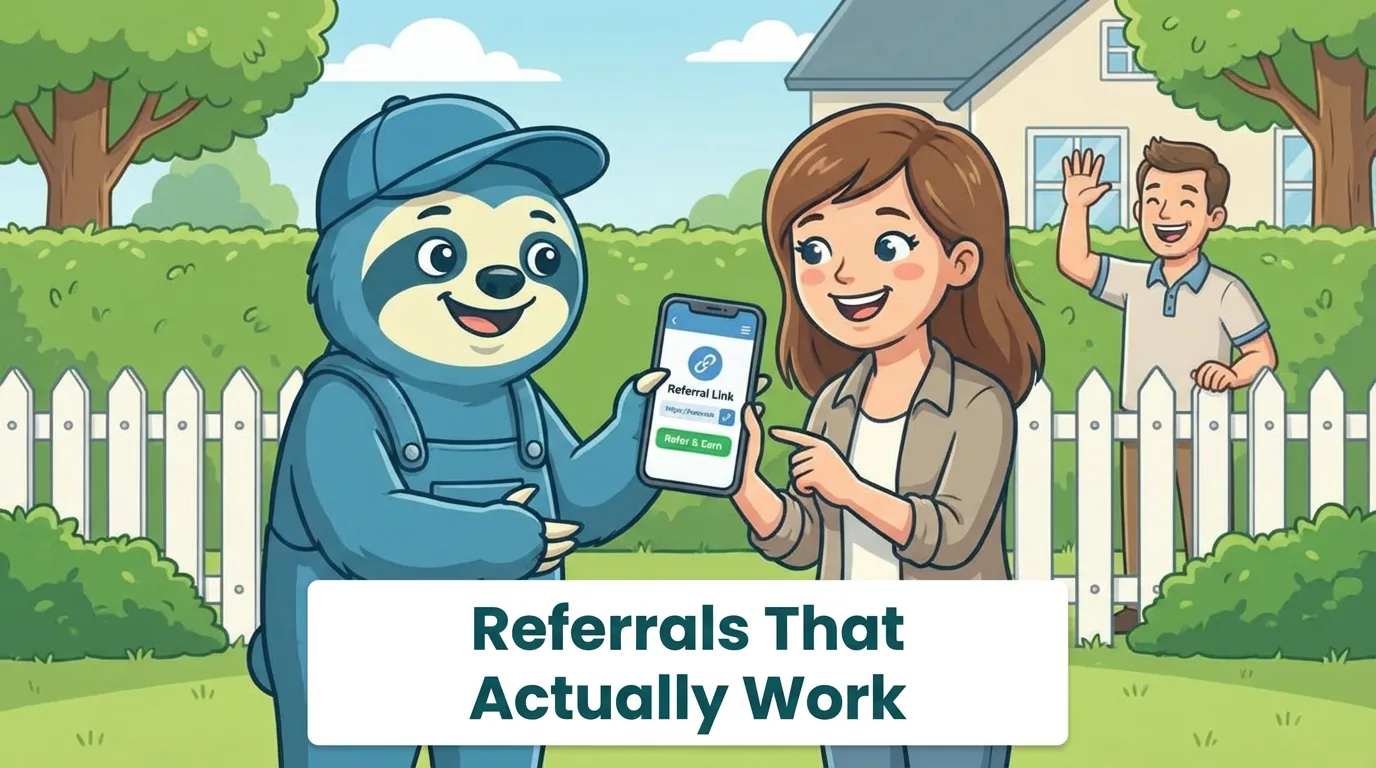
A shareable link that clients can text to friends is one of the simplest and most effective tools. The link goes to a landing page that says something like "Your neighbor [name] thought we might be able to help - here is how to reach us." The referring client does not have to explain your services or pricing. They just forward a link, and the landing page does the rest. This works especially well because texting a link takes five seconds, while explaining your referral program takes five minutes. 🚀
Pre-written text messages that clients can copy and personalize also reduce friction dramatically. Something like "Hey - I just had [Company Name] do my [service] and they were great. Here is their number if you ever need anything: [phone]." Having this ready to send in a follow-up message means the client does not have to compose anything from scratch. Most people are happy to refer but freeze when asked to write something on the spot.
Business cards with a clean design and a QR code that links to your booking page still work, especially for trades where neighbors see work happening in real time. A landscaping crew doing a visible front-yard transformation will generate curious neighbors. Having a card the homeowner can hand over in the moment captures referrals that would otherwise be forgotten by the time the neighbor gets around to searching online.
Building a Thank-You Workflow
Acknowledging referrals promptly and genuinely is what turns a one-time referrer into a repeat source of new business. When someone sends a friend your way, that referral should trigger an immediate response - not just to the new lead, but to the person who sent them.
A phone call or personal text from the owner thanking the referrer carries more weight than an automated email. It takes two minutes and communicates that you noticed, you appreciate it, and the relationship matters. For businesses doing high volume, a personal video message recorded on your phone is a middle ground between a personal call and an automated message. It takes 30 seconds to record and feels far more genuine than a template.
The thank-you workflow should also track referral patterns over time. Some clients will send you business repeatedly - these are your referral champions, and they deserve recognition beyond the standard thank-you. An annual gift, an invitation to a client appreciation event, or simply a sincere conversation about how much their referrals have meant to your business goes a long way. These high-value referrers are worth more to your business than most marketing channels, and treating them accordingly is smart business. 📈
Tracking Referral Sources Without Making It Complicated
You cannot improve what you do not measure, but referral tracking does not need to be complicated. The foundation is a single required question at intake - "how did you hear about us?" - that gets recorded in your CRM or job management system every single time, with no exceptions.
Train your team to ask this question conversationally rather than as a bureaucratic checkbox. "By the way, how did you find us?" gets a more honest answer than a dropdown menu on a web form. When the answer is a referral, capture who referred them so you can close the loop with a thank-you and track which clients are your strongest referral sources.
Over time, this data tells you which neighborhoods, which types of work, and which client profiles generate the most referrals. You might discover that your kitchen renovation clients refer at three times the rate of your small repair clients, which tells you something valuable about where to focus your best work and follow-up efforts. Referral data also helps you measure the return on your thank-you investments - if a particular type of appreciation gift correlates with repeat referrals, do more of it.
Referral Programs Across Different Trades
What works for a residential plumbing company does not necessarily work for a commercial cleaning service or a roofing contractor. The referral dynamics differ based on how visible the work is, how frequently clients need service, and how much the client interacts with neighbors and peers.
| Trade Type | Visibility | Referral Timing | Best Tactics |
|---|---|---|---|
| Landscaping, roofing, painting, fencing | High - neighbors see it live | During and immediately after the job | Yard signs, door hangers, QR cards for the homeowner |
| HVAC, pest control, cleaning | Low - work happens inside | Ongoing throughout the service relationship | Loyalty tiers, maintenance credit bundles |
| Renovations, major electrical, new construction | Moderate - project-based | Months or years after completion | Anniversary check-ins, seasonal tips, stay top of mind |
| Commercial cleaning, janitorial | Low | Quarterly or at contract renewal | Referral fees, reciprocal B2B arrangements |
For trades with visible exterior work - landscaping, roofing, painting, fencing - yard signs and door hangers in the neighborhood during active jobs are passive referral generators. The homeowner becomes a walking testimonial while the work is being done, and neighbors who see the transformation are already primed to ask about it. Making the homeowner proud of the work happening at their property turns them into an enthusiastic ambassador without any formal ask.
For trades with repeat service relationships - HVAC maintenance, pest control, cleaning services - the referral program can be built into the ongoing service relationship. Loyalty tiers that include referral bonuses feel natural because the client is already engaged with your business on a recurring basis. A pest control company that offers a free quarterly treatment for every two referrals is rewarding loyalty and generating new business simultaneously.
For high-ticket project work - renovations, new construction, major electrical upgrades - the referral often happens months or years after the job is complete. The key here is staying top of mind through periodic check-ins, seasonal tips, and anniversary messages. When a friend asks "do you know a good contractor?" six months from now, you want your client to remember your name instantly rather than having to dig through old emails.
Building a Referral Network for the Work You Decline
One of the most underused referral strategies is building reciprocal relationships with other contractors in complementary trades. When you decline a job that is outside your scope or refer a client to a trusted colleague, that colleague is far more likely to send work back your way. These contractor-to-contractor referrals are often the highest quality leads you will ever receive because they come with a professional endorsement.
Identify three to five contractors in non-competing trades who serve the same type of client you do. A plumber, electrician, HVAC tech, and general contractor who all work residential can become a referral circle where each member benefits from the others' client relationships. The key is that every member of the network delivers quality work - your reputation is on the line with every referral you make, so only refer contractors you would hire yourself. 🎯
These professional referral relationships also give you a graceful way to handle jobs you cannot take on. Instead of simply saying no to a potential client, you can say "that is not something we do, but I know someone excellent who does - let me connect you." The potential client appreciates the help, the contractor you referred appreciates the lead, and you have built goodwill on both sides that comes back around.
Frequently Asked Questions
Ready to transform your field service business?
Start using WorkZen today. It's free to get started!