Fall Maintenance Upsells for HVAC & Plumbing
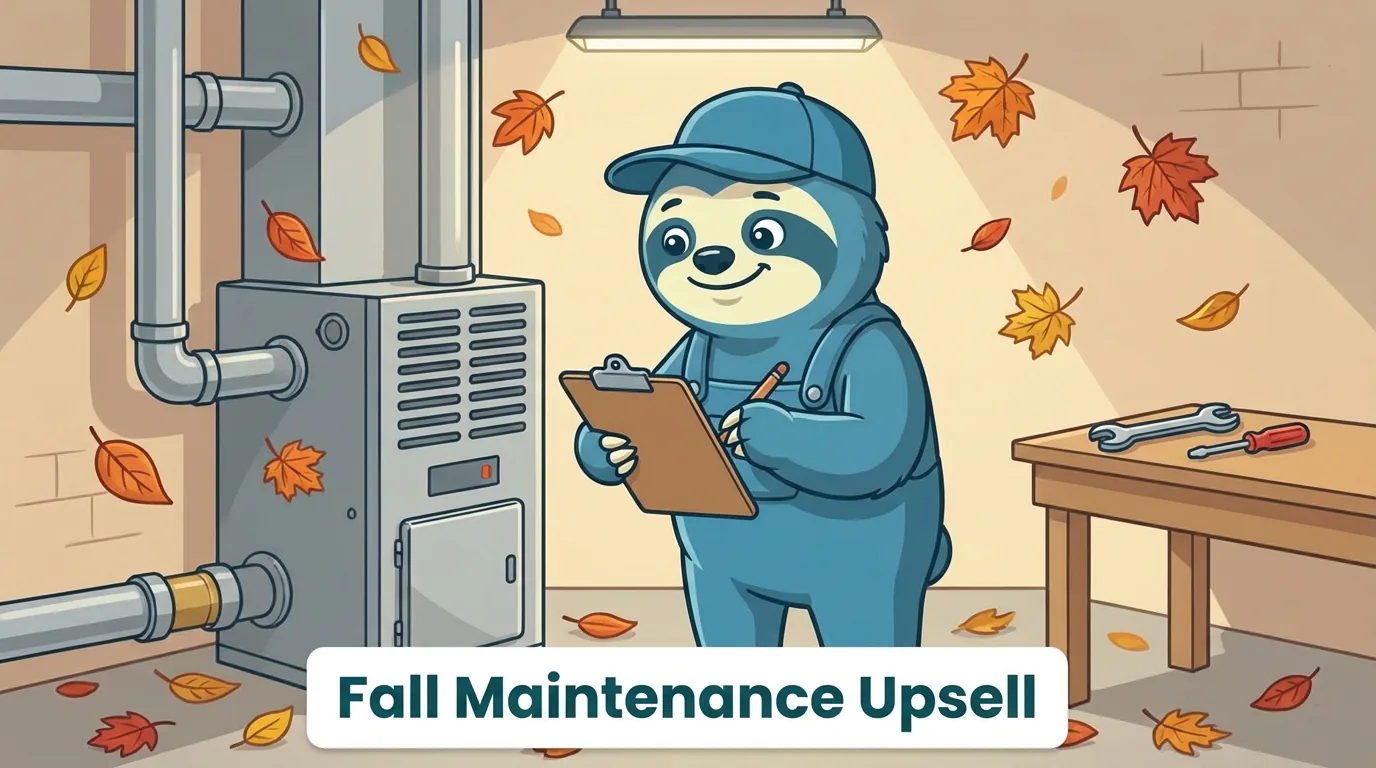
Fall is the most profitable eight weeks of the year for HVAC and plumbing crews, and most owners leave half the money on the table. Between mid-August and the first hard frost, every furnace, boiler, water heater, and outdoor faucet in your service area becomes a potential service ticket. Clients are receptive because they know what is coming. Schedules are open because the summer rush has cooled and the winter emergency wave has not started. The window is short, the demand is real, and the businesses that have a written playbook walk away with five-figure revenue swings while their competitors take whatever calls come in. ❄️
This is not a pitch for hard-selling tactics or pressure scripts. The crews that do best in fall are the ones that show up on time, perform thorough inspections, document findings clearly, and present recommendations the way a doctor presents test results - here is what we found, here is what it means, here is what we recommend. Most homeowners are happy to spend money on preventive work when they understand why. Your job is to give them the information and the path.
Why Fall Is the Highest-Leverage Window
Fall maintenance season has a unique combination of factors that no other time of year matches. Demand is concrete and immediate - every homeowner in a four-season market knows their heating system is about to be tested. Anxiety is low, which means clients are making rational decisions instead of emergency-call decisions. And the work itself is genuinely valuable: catching a cracked heat exchanger, a corroded pilot assembly, or a leaking shutoff valve in October is dramatically easier and cheaper than dealing with the same problem at 6am on a Saturday in January.
| Season | Demand Type | Client Mindset | Upsell Opportunity |
|---|---|---|---|
| Spring | Cooling prep | Rational, planned | Moderate - AC tune-ups, IAQ |
| Summer | Emergency cooling | Stressed, urgent | Low - just fix it now |
| Fall | Heating prep | Rational, anticipatory | High - full system review |
| Winter | Emergency heating | Panicked | Lowest - emergency only |
The math also favors fall because of how heating equipment fails. HVAC systems and water heaters tend to fail at startup after a long dormant period, not during normal operation. The first cold snap of the year produces 5 to 10 times the call volume of an average week, and a meaningful percentage of those calls are entirely preventable if the system had been inspected six weeks earlier. You can either earn that revenue as planned maintenance at full margin or absorb it as emergency dispatches at compressed margin and exhausted crew capacity.
The Two-Week Pre-Season Setup
The work that determines fall revenue happens in mid-August, before any actual jobs are booked. This is when you build the materials, train the crew, and structure the offers that you will run for the next eight weeks. Owners who skip this preparation end up improvising in September and October, and improvisation produces inconsistent results.
Start with your service packages. Build three clearly differentiated tiers - a basic tune-up, a standard maintenance package, and a premium plan with extras like priority scheduling and discounts on repairs. Print them on a single sheet that techs can hand to clients. Pricing should be visible, justifiable, and structured so the middle tier is the obvious choice for most homeowners.
| Package | Price Range | What's Included |
|---|---|---|
| Basic Tune-Up | $89 - $129 | 30-point inspection, filter check, written report |
| Standard Plan (annual) | $199 - $279 | Two visits/year, 15% repair discount, priority booking |
| Premium Plan (annual) | $329 - $449 | Two visits/year, 20% discount, priority + after-hours, no-trip-fee on emergencies |
Update your scheduling software with dedicated maintenance time slots. Block out two-hour windows specifically for tune-ups so dispatch can quickly fill them. The key insight is that maintenance jobs are predictable - they take the time they take, every time - which makes them the easiest jobs to schedule efficiently. Cluster them geographically and you can run six to eight per tech per day, which is far more revenue than chasing scattered repair calls.
Train the crew on the inspection checklist before the season starts. Every tech should be able to walk through a furnace inspection in their sleep, identify the eight to ten common findings that show up on most systems, and present those findings in plain English. Role-play the conversation. Most upsell failures come from techs who feel awkward presenting findings, not from clients who refuse legitimate work.
The Inspection-as-Sales-Conversation Framework
The most effective upsell happens during the inspection itself, not at the end as a separate pitch. When a tech identifies an issue, they should pause, show the client what they found, and explain it on the spot. This converts the inspection from a passive event into a guided diagnostic conversation that builds trust naturally.
The framework has four steps. First, find. Conduct the inspection methodically and document everything - readings, photos, measurements, observed conditions. Second, show. When you find something worth flagging, walk the client over and physically show them. Photos work if the location is hard to access. Third, explain. Translate the technical finding into consequence language: "this capacitor is reading 6 microfarads on a 7.5 rating - when it fails completely, your AC will not start, and that almost always happens during a heat wave." Fourth, offer. Present the repair option without pressure: "we can replace it today for 165 dollars, or you can leave it and we can come back when it fails - your choice."
| Finding | Consequence Language | Typical Repair Cost |
|---|---|---|
| Weak capacitor | "AC won't start during peak heat" | $145 - $225 |
| Cracked heat exchanger | "Carbon monoxide risk - immediate hazard" | $1,800 - $3,500 |
| Failing flame sensor | "Furnace will short-cycle and lock out" | $145 - $225 |
| Corroded shutoff valve | "Will not stop a leak when you need it to" | $185 - $325 |
| Sediment in water heater | "Reduced efficiency, premature tank failure" | $145 - $245 (flush) |
| Aged anode rod | "Tank corrosion accelerates within 12-18 months" | $185 - $325 |
The most important part of this framework is the absence of pressure. Clients can sense when they are being sold to, and they react defensively even to legitimate recommendations. By presenting findings as information and giving the client a clear choice, you eliminate the dynamic that triggers resistance. Most homeowners, given complete information, will choose to fix problems they understand. ✅
Pricing Strategy for Maintenance Plans
Maintenance plans are where fall season pays off twelve months later. A homeowner who signs a two-visit annual plan in September is on your books for next spring's tune-up, next fall's tune-up, and almost certainly any repair work that happens in between. The lifetime value of a plan member is typically 4 to 6 times the value of a one-off tune-up customer, and the renewal rate stays above 80% if you deliver the visits as promised.
Price the plan to reflect this lifetime value. The biggest mistake operators make is pricing maintenance plans at exactly twice the tune-up rate, which gives clients no incentive to upgrade. Build in real value: priority scheduling that means a same-week response when something breaks, a discount on repairs that pays for the plan in one significant repair, and small inclusions like filters or anode rods that have minimal cost to you but feel meaningful to the homeowner.
The standard math works like this. A 249-dollar annual plan covers two visits. Each visit takes 60-75 minutes of tech time at a fully-loaded cost of about 65 dollars. Materials and supplies run another 15 dollars per visit. Net contribution per plan is 249 minus 160 in delivery costs, equals 89 dollars - plus the conversion rate on repairs, which historically runs 50-65% on plan members. That repair stream is where the real money comes from. 💰
Keep enrollment friction low. The plan should be presentable on a single page, signable on a tablet at the kitchen table, and billable to a credit card on file with auto-renewal. Every additional step you add to enrollment cuts conversion by 10-20%. The goal is to make signing up easier than declining.
Common Upsell Categories Worth Building Scripts Around
Some upsells repeat so often that every shop should have prepared scripts and pricing for them. These are the eight to ten findings that show up on more than 30% of fall inspections, and having ready-to-deploy quotes turns them into reliable revenue rather than improvised conversations.
- Indoor air quality additions - UV lights, media filter upgrades, humidifier installation. Common in older homes and high-margin work that takes 90 minutes or less.
- Smart thermostat installation - Often a homeowner-driven request once the topic comes up. Average install is 75 minutes plus the device markup.
- Water heater anode rod replacement - Standard practice on tanks 4+ years old. Extends tank life dramatically and is a quick visit-day add-on.
- Capacitor or contactor replacement - The most common HVAC component failure. Cheap part, billable labor, prevents emergency calls.
- Outdoor faucet winterization or frost-free upgrade - Plumbing seasonal add-on that prevents the burst-pipe call in February.
- Gas line shutoff valve replacement - Old valves seize. Code-relevant work that customers understand once shown.
- Whole-home surge protector - Protects HVAC equipment from grid surges. Easy add-on during electrical inspection.
- Sump pump testing and battery backup - Pre-winter check that prevents flooded basements. Battery backup is a meaningful upsell.
Build a one-page reference card for each of these with the diagnostic criteria, the script for explaining the issue, the price, and the time required. Techs should be able to flip to the right card mid-visit and run the conversation without improvising. Consistency drives conversion.
Crew Compensation That Aligns With Upsells
If your techs are paid hourly with no upside on revenue, they have zero incentive to spend the extra ten minutes presenting findings to a client. The shops that consistently outperform on fall season are almost always the ones that have built compensation structures rewarding upsells without creating pressure-sales dynamics.
The simplest model is a flat percentage of upsell revenue, typically 5-10%, paid out monthly. A tech who lands an extra 8,000 dollars in upsells across the fall season earns an extra 400-800 dollars on top of their hourly wage, which is meaningful money. The percentage stays the same regardless of what they sell, which removes the incentive to push high-margin items over what the client actually needs.
Avoid commission structures that create misaligned incentives. Paying double commission on specific items, running monthly contests for highest-revenue tech, or threatening discipline for low conversion rates all push behavior in the wrong direction. The goal is for techs to do their job well and be rewarded fairly when their professionalism produces revenue. Anything that pushes them toward selling work that does not need to happen will eventually surface as customer complaints, refunds, or worse.
Track conversion rates by tech but use the data for coaching rather than punishment. A tech with a 15% upsell rate compared to a peer at 45% probably has a training gap, not a motivation problem. Pair them with a stronger tech for a few visits, work on specific scripts together, and the numbers usually improve quickly.
Marketing the Program to Existing Clients
Most fall maintenance revenue comes from existing clients, not new ones. Your customer database is the asset, and the businesses that mine it systematically every August generate predictable seasonal revenue while their competitors hope for inbound calls.
Run a three-touch outreach sequence starting in mid-August. The first touch is email - clean, scannable, with a clear booking link and the package pricing visible. The second touch, two weeks later, is a postcard or letter to clients who did not respond to email. The third touch, in early September, is a brief outbound phone call from a CSR or owner to top-tier clients who still have not booked. The phone call converts at much higher rates than email but takes more time, so reserve it for clients with the highest lifetime value.
| Touch | Timing | Channel | Expected Response Rate |
|---|---|---|---|
| Touch 1 | Mid-August | Email + booking link | 8-15% |
| Touch 2 | Late August | Postcard or letter | 3-5% (incremental) |
| Touch 3 | Early September | Phone call (top tier) | 25-40% |
Track booking source carefully. Most CRMs let you tag the source of every booking - email campaign, postcard, phone call, website form, referral. After the first season of careful tracking, you will know exactly which channels produce the best return on time and money, which lets you double down the following year.
Pulling It All Together
Fall maintenance season rewards preparation more than any other operating period. The crews that win are not the ones with the best techs or the lowest prices - they are the ones who decided in August what they were going to do, built the materials, trained the team, and executed the same playbook every visit for eight weeks. By the time the first cold snap hits in late October, their calendars are full, their plan members are renewing, and their year-end revenue is already trending above last year.
The discipline compounds. Year two is easier because you have last year's metrics, the templates are built, and your plan members are an existing book of business. Year three is easier still. Within a few seasons, fall maintenance becomes the most predictable revenue stream in the company - which is exactly what every service business owner says they want, and exactly what most never build.
Frequently Asked Questions
Ready to transform your field service business?
Start using WorkZen today. It's free to get started!