The 60-Day Tech Onboarding Plan That Cuts Turnover
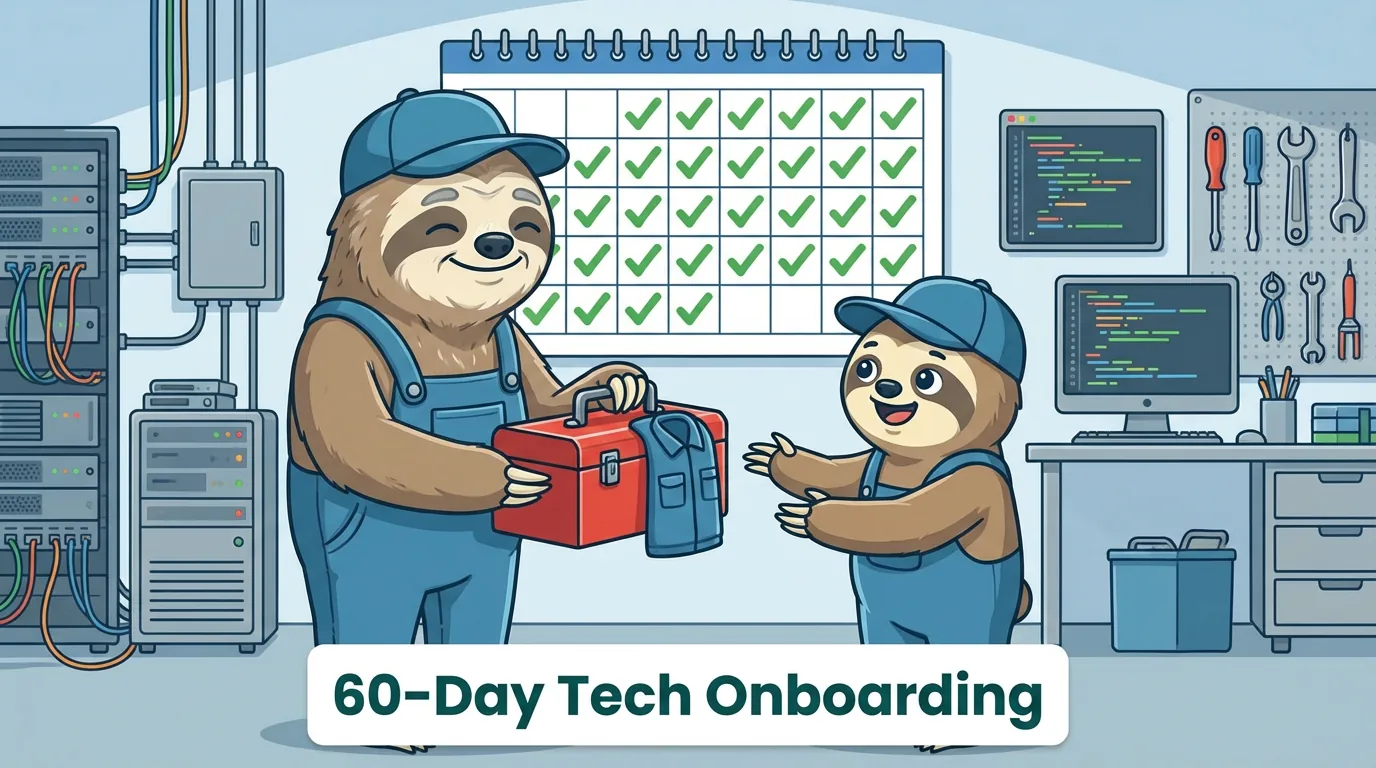
The first 60 days of a new tech's tenure determine whether they will become a productive long-term contributor or join your turnover statistics within a year. Most small service businesses do this period badly - not because they do not care, but because they have never built a structured plan and instead default to "throw them in with a senior tech and see how it goes." The approach works for some hires through luck, fails for others through chaos, and produces consistently mediocre retention because nobody is actually responsible for ensuring the new person is set up to succeed. 🔧
The fix is a documented 60-day plan that defines what happens in each week, what skills are being built, what client work is appropriate at each stage, and what evaluation conversations need to happen at each checkpoint. The plan does not need to be elaborate - a one-page outline covers most of what is needed - but it does need to actually exist and be followed consistently across hires. The investment to build it once is small. The retention payoff compounds across every tech you hire from that point forward.
Why the First 60 Days Matter So Much
The new tech's first two months are forming impressions that shape the rest of their tenure with the company. They are deciding whether the company is well-run or disorganized, whether their coworkers are competent or struggling, whether the work is what they expected or something else, and whether their decision to take this job was correct. Each of these impressions hardens quickly and is difficult to change later.
Bad first impressions create a downward spiral. A tech who decides in week 2 that the company is disorganized starts looking for evidence to confirm that impression rather than evidence to challenge it. By month 6, they are mentally checked out. By month 9, they are taking recruiter calls. By month 14, they are gone. The departure feels surprising to the owner because everything seemed fine - but the decision was actually made in week 2, and everything afterward was just confirmation.
Good first impressions work the same way in reverse. A tech who decides in week 2 that the company is well-run, their coworkers are sharp, and the work is meaningful starts noticing the things that confirm those impressions. They build relationships faster, take on responsibility willingly, and develop into senior contributors who stay for years. The same person, given a different first 60 days, could easily end up in the turnover column.
The structured plan exists to ensure the first impressions are good ones. Not by pretending - real problems should not be hidden - but by demonstrating that the company has thought about this, invests in its people, and runs intentionally rather than chaotically.
The Pre-Start Setup: Making Day One Feel Real
The work that determines whether onboarding starts well happens before the new tech walks through the door. Companies that just figure things out on day one signal disorganization from the first hour. Companies that have everything ready signal that the new person was expected, planned for, and is welcomed.
Pre-start checklist, completed at least 48 hours before the first day:
- Vehicle assigned, cleaned, fueled, inventoried with starting tool kit
- Phone, tablet, or computer set up with all necessary accounts and apps
- Uniforms ordered (not "we'll order them this week" - actually shipped and arrived)
- First-week schedule completed with the senior tech who will be the buddy
- Training materials, manuals, and code books in the vehicle or at the desk
- Direct deposit, tax forms, benefits enrollment paperwork prepared
- Office space or locker assigned, business cards ordered if applicable
- Crew notified that the new tech is starting and what their role is
The signal is unmistakable. A new tech who arrives on day one to find their truck ready, their tools in place, their uniform fitting properly, and their colleagues expecting them is in an entirely different mindset than a tech who arrives to "uh, let me check on your truck" and "your uniforms are on order, should be here next week." The second experience produces immediate doubt about the company's competence; the first produces immediate confidence. ✅
Week 1: Orientation Without Drowning
The first week should be heavy on orientation and light on field work. The temptation to get the new tech billable quickly is strong but counterproductive - sending someone into client homes before they understand the company's standards, processes, and expectations virtually guarantees mistakes that will need to be corrected later.
Day 1 covers paperwork, facility tour, introductions to all team members, equipment fitting, and review of the company handbook. Day 2 introduces the field service software, scheduling system, communication tools, and standard daily workflow. Days 3-5 are ride-along days with the senior tech buddy, watching how jobs are actually performed in the field, observing client interactions, and learning the location of common parts and supply houses.
| Day | Focus | Key Activities |
|---|---|---|
| Day 1 | Administrative + welcome | Paperwork, tour, introductions, equipment fit |
| Day 2 | Systems and software | FSM platform, communication, daily workflow |
| Days 3-5 | Observation ride-alongs | Watch jobs, observe client interactions, learn supply network |
| Day 5 PM | Week 1 check-in | 30-minute conversation with manager, review progress |
The end-of-week check-in is critical and often skipped. Twenty to thirty minutes between the new tech and the owner or service manager, asking how the week went, what they have observed, what is confusing, what they need. This conversation does two things: it surfaces issues early before they accumulate, and it signals that the company actually cares how the new person is doing. Both effects are large.
Weeks 2-3: Guided Practice With Increasing Autonomy
Weeks 2 and 3 shift from observation to participation. The new tech now performs work but with the senior tech buddy present, providing supervision, answering questions, and stepping in when needed. The pace progressively increases - more of the actual job is performed by the new tech, less by the buddy, until by end of week 3 the new tech is leading the work with the buddy in support mode.
Specific skills to develop in this phase:
- Standard service procedures for the most common job types in your trade
- Use of all field service software for documentation, parts, and invoicing
- Client communication during arrival, work, and completion
- Diagnostic process for the typical problems your shop sees
- Pricing structure and how to present it to clients
- Safety procedures and code requirements
- When to call dispatch or the owner versus handling something independently
The senior tech buddy needs explicit guidance about how to teach. Most senior techs default to doing the work themselves while the new person watches, which is fast but does not develop competence. The right pattern is the new tech doing as much as they can, with the buddy intervening only when necessary. Frustrating for the buddy in the short term, much faster development for the new tech.
End of week 2 and end of week 3 each include a short check-in. By end of week 3, the new tech should be functionally competent on the most common job types and ready to consider some solo work in week 4 or 5.
Weeks 4-6: First Solo Jobs With Safety Net
The first solo jobs are a major milestone. Done well, they build confidence and demonstrate to the new tech that they have actually become competent. Done poorly - which usually means too soon, with too much complexity, and inadequate support - they can crater confidence and start the disengagement curve before week 6 is over.
The right structure is gradual independence. Week 4 includes the first solo job, but it should be a known simple job type, scheduled in the morning when help is easily reachable, on a client who is patient and well-known to the company. The new tech handles the work but checks in by phone or text at key decision points. The buddy or service manager is available for questions and could meet at the job site within 30 minutes if needed.
| Week | Job Profile | Support Structure |
|---|---|---|
| Week 4 | First solo: simple, known job type, patient client | Check-in calls, buddy reachable, 30-min response time |
| Week 5 | 2-3 solo jobs/day, mix of routine work | Daily debrief, buddy on standby |
| Week 6 | Full solo schedule of routine work, no complex jobs yet | Standard support, complex jobs still go to senior |
By end of week 6, most new techs in service trades should be handling a full schedule of routine work independently while still escalating complex or unusual situations to senior staff. The pace varies by trade and individual - some techs reach this point in week 4, others need until week 8 - but the structure remains the same: gradual independence with explicit support availability.
Weeks 7-8: Skill Expansion and Integration
The last two weeks of the formal 60-day plan focus on expanding from routine work to broader competence. The new tech is exposed to job types they have not yet handled, advanced situations that require more experience, and the rhythms of how the team handles less-common scenarios. The goal is integration into the full workflow rather than continued isolation in a "new tech" pattern.
Specific milestones for this phase:
- Handle at least one example of every common job type your shop services
- Lead or substantially contribute to one complex job with senior tech present
- Successfully diagnose and resolve a problem that was not in the standard playbook
- Complete a difficult client conversation - upset client, complicated explanation, change order
- Demonstrate use of all major systems independently, including time tracking, invoicing, and parts ordering
- Build relationships with at least three other team members beyond the buddy
The 60-day check-in at the end of week 8 is the most important conversation in the entire onboarding process. Three things happen in that meeting: the company assesses whether the hire is on track to be a strong long-term contributor, the new tech assesses whether the company is the right place for them long-term, and both parties commit (or do not commit) to the longer relationship.
The 60-Day Evaluation: Honest, Specific, Documented
The 60-day evaluation is where many companies fail through softness. Owners who feel awkward giving direct feedback, want to avoid difficult conversations, or hope problems will resolve themselves end up letting marginal hires drag past 90 days, at which point the cost of separation is much higher and the resentment of senior staff who have been picking up slack is significant.
The evaluation needs to cover three dimensions explicitly. Technical performance: is the new tech meeting the productivity and quality bar expected at this stage? Behavioral fit: how are they showing up - reliability, professionalism, team contribution? Cultural integration: are they building relationships with the team and aligning with how the company operates?
| Dimension | Strong Performance | Concerning Performance |
|---|---|---|
| Technical | Handling routine work independently, learning quickly | Still requiring frequent help on basic jobs |
| Reliability | On time daily, completes assignments, takes initiative | Inconsistent attendance, missed details, passive |
| Communication | Clear with clients and team, asks good questions | Avoids difficult conversations, unclear updates |
| Team integration | Building relationships, willing to help others | Isolated, withdrawn, or actively friction-creating |
| Trajectory | Improving steadily week over week | Plateaued or declining since week 4 |
If the evaluation is positive across the board, the conversation focuses on what comes next - specific goals for months 3-6, areas of continued development, longer-term progression conversations. If the evaluation is mixed, specific feedback on what needs to improve and a defined timeline (typically 30-60 days) for showing improvement. If the evaluation is clearly negative, the honest conversation about whether this is the right fit - and if not, separation is usually better at day 60 than at day 180. ⚖️
What Senior Techs Need From the Process
The senior tech buddies who actually do the day-to-day teaching deserve consideration that companies often skip. Asking a senior tech to mentor a new hire is real work - it slows their own productivity, requires patience, and consumes mental energy that would otherwise go to their own jobs. Treating it as "just part of being a senior tech" without recognition or support eventually exhausts even the most willing mentors.
Three things make the buddy role sustainable. First, explicit recognition - both in conversation and ideally in compensation. A small monthly bonus during active mentoring (200-500 dollars per month) makes the role feel valued. Second, training on how to teach - many strong techs have never thought about how to transfer their knowledge to someone else and benefit from a few hours of explicit guidance on teaching techniques. Third, rotation - no single senior tech should be the buddy for every new hire indefinitely, both to spread the load and to give multiple senior techs the experience of developing into mentor roles.
The companies that do this well end up with multiple senior techs who can run effective onboarding for new hires, which scales the company's hiring capacity significantly. Companies that depend on one or two informal mentors find that hiring is throttled by mentor capacity, and growth gets capped by something most owners do not even realize is the constraint.
Pulling It All Together
The structured 60-day plan is not glamorous and does not produce immediate visible benefits. It is one of those discipline investments where the return shows up in the absence of bad outcomes - lower first-year turnover, faster productivity ramp, better integration, fewer mistakes that damage client relationships - rather than in any specific metric you can point to as the win.
The cumulative effect across years is enormous. A company that builds the discipline to onboard every new tech consistently develops a reputation in the local trade community as a place where people are set up to succeed, which improves recruiting. The team that exists is more cohesive because everyone went through the same intentional integration. The skill level of the company keeps rising because nobody got pushed into solo work before they were ready, which means fewer bad habits to unlearn later.
The investment is a one-time effort to build the plan plus consistent execution from there. The payoff is a meaningfully better team, year after year, that compounds into competitive advantage that competitors who skip this work cannot match without going through the same multi-year build themselves. Most service businesses do not do this. The ones that do, win.
Frequently Asked Questions
Ready to transform your field service business?
Start using WorkZen today. It's free to get started!