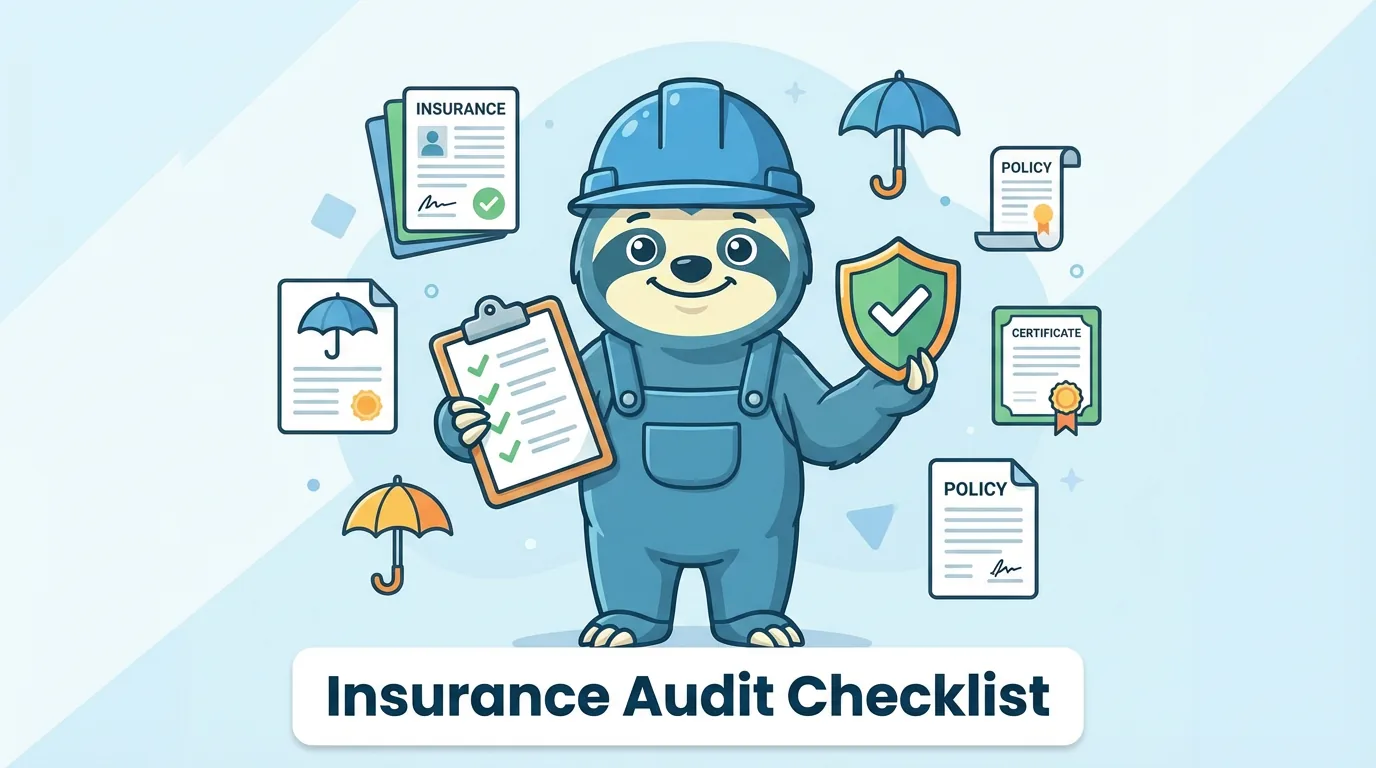
Contractor Insurance Audit: Are You Covered?
Insurance is the line item nobody wants to think about until they need it. Most service business owners set up coverage during their first year of operation, accept whatever the first agent recommended, and renew it on autopilot for the next decade with annual premium increases they grumble about but never actually examine. Then something serious happens - a fire, a major water leak, a workplace injury, a vehicle collision - and they discover that the coverage they assumed was protecting them has gaps that leave the business or even personal assets exposed. By the time the gap is visible, it is too late to fix. 🛡️
The audit process described here is not glamorous and is not enjoyable, but it is one of the highest-ROI exercises available to a service business owner. Working through every coverage type systematically, identifying actual exposures relative to policy limits, and updating coverage to match real-world risk takes a focused day of work and can prevent catastrophic losses that would otherwise end the business. Most contractors who actually do this audit find at least one significant gap they were unaware of - and many find several.
General Liability: The Coverage That Protects You From Your Work
General liability is the foundation policy for any service business, and it is also the policy where coverage gaps cause the most damage. The policy responds to claims that arise from your business operations causing bodily injury or property damage to third parties - clients, neighbors of clients, anyone who is not your employee. For service contractors who work in client homes and businesses, the exposure is constant.
The first thing to verify is the coverage limit relative to actual exposure. A 1 million dollar per-occurrence limit was reasonable in 1995 and is genuinely inadequate today for most contractors. Property values, medical costs, and litigation awards have all risen significantly. A single substantial claim - water damage to a 1.5 million dollar home, a fire that spreads to adjacent properties, an injury that produces long-term medical costs - routinely exceeds 1 million dollars now.
| Limit Configuration | Annual Premium Range | Appropriate For |
|---|---|---|
| $1M / $2M (per occurrence / aggregate) | $1,200 - $2,400 | Very small operations, residential only |
| $2M / $4M | $1,800 - $3,500 | Most small to mid contractors |
| $5M / $10M | $3,500 - $7,500 | Larger operations or commercial work |
| $1M GL + $1M umbrella | $1,800 - $3,000 | Cost-effective hybrid for most contractors |
| $2M GL + $5M umbrella | $3,200 - $5,500 | Most cost-effective for serious coverage |
The most cost-effective structure for most contractors is moderate underlying limits with a substantial umbrella policy. An umbrella sits on top of your general liability and commercial auto policies, providing additional coverage that activates when underlying limits are exhausted. The premium per million of coverage drops significantly under an umbrella - you might pay 1,800 dollars for the first 2 million of GL but only 600 additional dollars for 3 million more in umbrella coverage on top.
Verify which operations are actually covered. Many GL policies have exclusions for specific work types - sometimes water damage from plumbing, sometimes electrical work in older buildings, sometimes any work above a certain dollar value. These exclusions are buried in the policy contract and rarely surface until a claim is denied. Read the actual policy, not just the declarations page, and have your agent walk through any exclusion that touches your normal operations.
Commercial Auto: Vehicles That Are Working Tools
Commercial auto insurance is technically separate from personal auto policies and significantly different in structure. Most commercial auto issues stem from contractors trying to use personal auto coverage on vehicles that are actually used for work - a structure that produces denied claims when something happens, because the personal policy excludes business use.
Every vehicle used for work, including the owner's personal truck if it is regularly used to drive to job sites or transport tools and materials, should be on a commercial auto policy. The premium difference is meaningful - commercial coverage typically costs 30-60% more than equivalent personal coverage - but the coverage actually responds when an accident occurs during business use. Personal auto policies almost universally exclude business use and will deny claims for accidents that occurred while the vehicle was being used for work.
| Vehicle Use Pattern | Right Policy Type |
|---|---|
| Owner's personal vehicle, never used for work | Personal auto only |
| Owner's vehicle used occasionally for work errands | Personal auto with business use endorsement |
| Owner's vehicle used regularly to drive to jobs | Commercial auto required |
| Company-owned service vehicle | Commercial auto, no exception |
| Tech's personal vehicle used for company work | Hired and non-owned auto coverage on commercial policy |
Hired and non-owned auto coverage is the often-missed piece. If any tech ever uses a personal vehicle for company business - picking up parts, running to a job site, even driving between locations - your commercial auto policy needs an endorsement covering that use. Without it, an accident during business use of a personal vehicle could leave the company liable with no coverage to respond, since the tech's personal policy excluded business use and the company policy did not include the vehicle.
Coverage limits matter as much on auto as on GL. Standard commercial auto limits of 1 million combined single limit are increasingly inadequate. A serious accident with injuries can easily exceed that figure, and the umbrella sitting over the auto policy is what provides realistic protection. Verify that the umbrella policy actually attaches to the auto policy - this is sometimes a separate election that can be missed during policy setup.
Workers Compensation: Required and Often Misconfigured
Workers compensation is mandated in most states for any business with employees, but the details of how it works trip up many contractors. The policy covers medical costs and lost wages for employees injured on the job, regardless of fault, and includes some employer liability protection for situations where injured employees might sue beyond workers comp benefits.
The most common configuration error is misclassification of employees by job code. Workers comp premiums are calculated based on job classification - a clerical employee is rated very differently than a roofer or HVAC tech who works in attics. Contractors sometimes accept whatever classification the carrier suggests at policy setup and never review whether employees are actually performing those duties. The result is either overpayment (employees in lower-risk roles being charged at higher-risk rates) or underpayment (employees doing higher-risk work being charged at lower-risk rates), both of which surface during the carrier's annual audit and can produce significant unexpected bills. ⚙️
| Service Role | Typical WC Class | Rate per $100 Payroll |
|---|---|---|
| Office / clerical | 8810 | $0.20 - $0.40 |
| Inside sales / CSR | 8810 | $0.20 - $0.40 |
| HVAC service tech | 5183 | $4.50 - $7.50 |
| Plumber | 5183 | $4.50 - $7.50 |
| Electrician | 5190 | $3.00 - $6.00 |
| Roofer | 5551 | $20.00 - $40.00 |
| Construction laborer | 5606 | $5.00 - $10.00 |
Owner exclusions are worth understanding. Most states allow owners or partners to exclude themselves from workers comp coverage, which can save meaningful premium dollars - but the exclusion means an injured owner has no workers comp benefit to fall back on. For sole proprietors and partners with comprehensive personal disability and health insurance, the exclusion makes sense. For owners without that personal coverage, including yourself in workers comp may be the better choice despite the premium cost.
Subcontractor coverage is the other landmine. If you regularly use subcontractors, your workers comp policy has specific rules about what coverage they must carry to be excluded from your premium calculation. Failing to collect and document certificates of insurance from subcontractors can result in those subcontractors being charged to your policy at audit, which produces significant unexpected costs. Set up a process where every subcontractor provides a current COI before any work begins, and store the documents systematically.
Professional Liability and Errors & Omissions
Professional liability covers claims that arise from professional services provided incorrectly - design errors, code compliance failures, recommendations that turned out to be wrong. Many service contractors think they do not need this coverage because they are "just doing the work," but anyone who specifies materials, designs systems, or provides recommendations is potentially exposed.
The classic example is the HVAC contractor who specs a system that turns out to be undersized for the building. The system runs constantly, fails prematurely, and the homeowner sues for the cost of replacement plus elevated utility bills during the period of inadequate operation. This is not a general liability claim because no third party was injured and no property was damaged in the traditional sense - it is a professional services claim, and only professional liability coverage responds.
The need for professional liability scales with the kind of work you do. Pure service contractors doing repairs to manufacturer specifications have limited exposure. Contractors who do design-build work, system specifications, code analysis, or anything involving professional judgment have meaningful exposure. The premium is moderate - typically 500-1,800 dollars annually for small contractors - and the coverage fills a real gap that GL does not address.
Property and Equipment Coverage
Business personal property coverage protects your tools, equipment, inventory, and contents at your business location. The common gap is undervaluation - contractors who insured their original tool inventory at startup and never updated coverage as the business accumulated more equipment over years. A shop that started with 20,000 dollars of tools and now has 90,000 dollars of equipment is almost certainly underinsured by 70,000 dollars on the property policy.
Inland marine coverage handles tools and equipment when they are away from the business location - in trucks, at job sites, in transit. Standard property policies have limited coverage for equipment off premises, and inland marine specifically extends coverage to wherever the equipment actually goes. For service contractors whose equipment is in vehicles 95% of the time, inland marine is essential rather than optional.
| Equipment Category | Typical Coverage Need |
|---|---|
| Hand tools and small power tools | Inland marine, scheduled or blanket |
| Major specialty equipment (cameras, locator tools) | Inland marine, scheduled with appraisal |
| Vehicle-mounted equipment (compressors, generators) | Inland marine, vehicle-specific |
| Shop equipment (lifts, benches, large tools) | Property at business location |
| Inventory and parts | Property at business location |
| Office equipment (computers, monitors) | Property at business location |
Verify replacement cost vs actual cash value coverage. Replacement cost pays what it actually costs to replace the item with new equivalent equipment. Actual cash value pays depreciated value, which is often half or less of replacement cost on equipment more than a few years old. The premium difference is moderate but the coverage difference at claim time can be substantial.
Cyber Liability: The Coverage Most Contractors Skip
Cyber liability is the newest coverage category and the one most service contractors do not carry, on the theory that they are "just a small contractor, why would anyone hack us." The theory is wrong. Service businesses store significant amounts of client data - addresses, phone numbers, payment information, sometimes credit card numbers - and ransomware attacks routinely target small businesses precisely because they have weaker defenses than larger companies.
A typical ransomware attack on a small service business shuts down operations for 5-14 days, costs 15,000-60,000 dollars in IT recovery and ransom payments, and may produce regulatory exposure if client data was exposed during the breach. Cyber liability coverage at modest limits (250,000-500,000 dollars) typically costs 800-1,500 dollars annually and provides the resources - forensics, breach notification, ransom negotiation, business interruption coverage - that turn a catastrophic event into a manageable one.
The coverage is increasingly required by commercial clients as part of their vendor risk management. Larger property management companies, hospitals, and government contracts often require cyber liability certificates from contractors as a condition of getting hired. Carrying the coverage opens doors that would otherwise be closed to contractors without it.
Putting It All Together: The Annual Audit
The full audit process takes a focused day of work, ideally with your independent agent participating. The structure is the same every year: review every policy in force, identify changes in the business since last review, evaluate coverage limits against current exposure, compare quotes from at least one alternative carrier, and update policies that have meaningful gaps.
| Audit Step | What to Do |
|---|---|
| 1. Inventory current coverage | List every policy, carrier, limits, premiums, renewal dates |
| 2. Identify business changes | New services, new locations, new equipment, new employees |
| 3. Recalculate exposure | Property values, payroll growth, revenue changes |
| 4. Identify coverage gaps | Compare current coverage to current exposure |
| 5. Shop alternatives | Get competitive quotes from at least one other carrier |
| 6. Update policies | Adjust limits, add endorsements, fix gaps |
| 7. Document everything | File policies, COIs, notes from the review |
The work feels tedious until something happens. The first time a contractor walks through a serious claim and discovers that their coverage actually responds the way it should, the value of the audit becomes obvious. The first time a contractor discovers a gap during a claim that the audit would have caught - and ends up personally liable for damages the policy should have covered - the cost of skipping the audit becomes painfully obvious. 💼
Pulling It All Together
Insurance is one of those expenses that produces no visible value until exactly the moment when it produces enormous value. The contractor who has been paying premiums for years without incident often feels they are wasting money - until the claim arrives and the coverage either saves the business or fails to. Which of those two outcomes happens depends almost entirely on whether the policies were structured correctly during the years when nothing was going wrong.
The annual audit is what creates that structure. It is unsexy work that produces no immediate benefit and probably feels like overhead during the day you spend on it. But spread across the lifetime of a service business, doing the audit consistently is the difference between a company that can absorb a major claim and continue operating and a company that gets wiped out by a single bad event. The math, run honestly, makes it one of the most important habits an owner can build.
Frequently Asked Questions
Ready to transform your field service business?
Start using WorkZen today. It's free to get started!