The Real Math of Hiring a Dispatcher
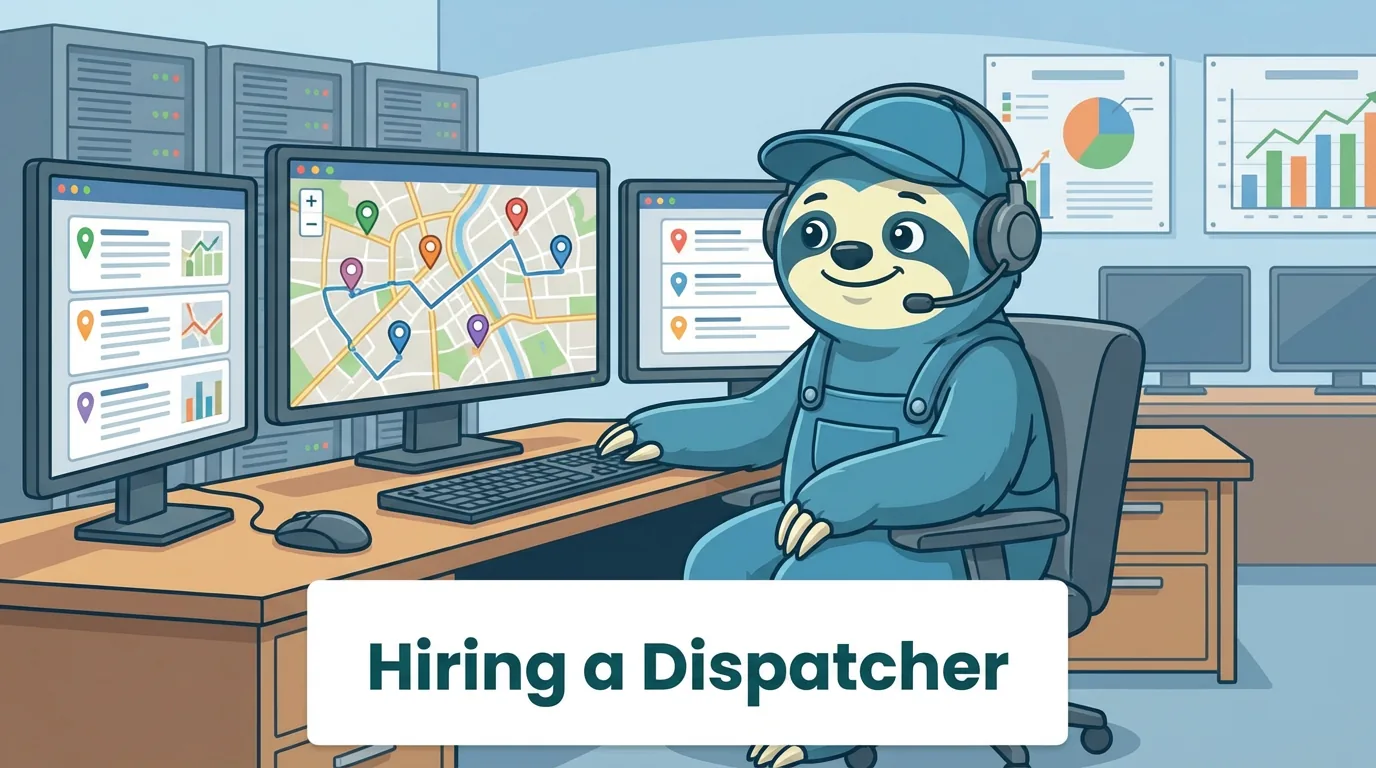
The dispatcher hire is the single most consequential admin decision most service businesses make on the way from owner-operator to scaled operation. Before the hire, the owner or a multi-hat admin handles scheduling between everything else they do, which works fine until it suddenly does not. After the hire, an entire role exists to optimize what was previously fitted into the cracks of someone else's day. The leverage when this hire is timed and structured well is enormous - 15-25% improvements in revenue per tech are common - but the cost when it goes wrong is real and visible immediately, since you have just added 60,000 dollars of annual fixed cost that does not generate billable hours. 📋
The mistake most owners make is hiring a dispatcher too early or too late. Too early, and the role does not have enough volume to fill, the dispatcher gets bored and frustrated, and the math never works because there were not enough jobs to optimize. Too late, and you have lived through years of suboptimal scheduling, exhausted yourself doing dispatch work that should have been delegated, and probably watched your best techs leave because the chaos got to be too much. Getting the timing right requires understanding what dispatchers actually do and matching that to where your operation is.
What a Dispatcher Actually Does
The job title undersells the role. A good dispatcher is doing about six things simultaneously, and the value comes from doing all of them well rather than any one in isolation. The first is real-time route optimization - looking at the day's jobs and crews, considering travel times, parts availability, and tech skill match, and adjusting the schedule continuously as conditions change. The second is communication hub - fielding inbound questions from techs, relaying client updates, escalating issues to the owner or service manager. The third is exception handling - cancellations, no-shows, emergency calls, parts shortages, sick techs - and reorganizing the day around them.
The fourth is information capture - making sure jobs are accurately documented as they happen, parts are noted, completion details are recorded. The fifth is client communication - confirming appointments, notifying about arrival windows, handling reschedules. The sixth is forward planning - looking at tomorrow's, next week's, next month's calendars and identifying problems before they become emergencies.
| Dispatcher Function | Time % of Day |
|---|---|
| Real-time scheduling and routing | 25-35% |
| Tech communication and support | 15-25% |
| Client communication | 15-20% |
| Exception handling (changes, emergencies) | 15-20% |
| Information capture and CRM hygiene | 5-10% |
| Forward planning and reporting | 5-10% |
The percentages shift constantly. A morning with three cancellations and two emergency calls might be 60% exception handling and route adjustment. An afternoon with stable jobs running on schedule might be 50% client communication and information capture. The role is fundamentally reactive in real-time and proactive between fires - which is why it cannot be done well by someone with another full-time responsibility.
When You Are Ready: The Volume and Complexity Test
The decision to hire is driven by two factors: volume and complexity. Volume is the number of jobs per day across all crews. Complexity is how often the original schedule changes during the day - cancellations, emergency add-ons, parts issues, traffic, weather. High volume with low complexity (say 30 commercial PM visits scheduled three weeks in advance) might not need a dispatcher. Low volume with high complexity (15 residential service calls with constant rescheduling) absolutely does.
The simplest test is to track owner or admin time spent on scheduling for two weeks. If the cumulative time exceeds 25 hours per week and is interrupting other work that has higher dollar value, you are at the threshold. Most owners discover the number is significantly higher than they thought - dispatch work has a way of expanding to fill cracks rather than appearing as discrete blocks of time, which makes it invisible until measured.
| Operation Profile | Dispatcher Need |
|---|---|
| 1-3 techs, 10-15 jobs/day, scheduled 2+ days ahead | Owner or multi-hat admin handles |
| 4-6 techs, 20-30 jobs/day, mixed scheduling horizons | Dedicated dispatcher starts paying off |
| 6-10 techs, 30-50 jobs/day | Dispatcher essential, possibly two |
| 10+ techs, 50+ jobs/day | Dispatch team with shifts |
Complexity multipliers push the threshold lower. A shop running 24/7 emergency service with high call volume needs a dispatcher at smaller crew size than a shop running 9-5 commercial maintenance. Multi-trade operations - HVAC, plumbing, and electrical under one roof - need dispatch coverage earlier than single-trade shops because the matching of jobs to skills adds significant complexity.
The True Cost: Salary Plus the Things You Don't See
The fully-loaded cost of a dispatcher is much higher than the base salary, and owners who plan around the salary number alone end up surprised by the actual hit. Base salary for an experienced service dispatcher in most US markets runs 42,000 to 58,000 dollars. Add payroll taxes at 10-12%, benefits at 15-25%, and shared overhead - desk space, computer, software seat, phone, training - and the total rises significantly.
| Cost Component | Annual Range |
|---|---|
| Base salary | $42,000 - $58,000 |
| Payroll taxes (FICA, FUTA, SUI, workers comp) | $5,000 - $7,500 |
| Health insurance contribution | $4,800 - $9,600 |
| Retirement match (if offered) | $1,500 - $3,500 |
| Software seat (FSM platform, phone system) | $1,200 - $2,400 |
| Office overhead allocation | $1,800 - $3,600 |
| Training and ongoing development | $500 - $1,500 |
| Total fully-loaded annual cost | $56,800 - $86,100 |
The number is sobering when you see it written down. A dispatcher needs to generate at least 60,000 to 90,000 dollars in additional contribution margin just to break even - which is meaningful pressure on the role to actually deliver results.
The break-even math runs through tech utilization. A tech billing 6 jobs per day at average ticket of 425 dollars produces 2,550 dollars per day in revenue. An 8% utilization improvement - reaching 6.5 jobs per day on average - adds 200 dollars per tech per day. Across 5 techs over 220 working days per year, that is 220,000 dollars in additional revenue, of which 30-40% drops to gross margin. The dispatcher pays for themselves several times over if they hit even modest utilization gains.
Internal Promotion vs External Hire
Almost every successful dispatcher hire I have seen at small service businesses came from inside the company. The reason is simple: dispatching is 60% deep operational knowledge - what jobs take how long, which techs are strong on which work types, how long travel actually takes between specific neighborhoods, what parts are usually needed - and 40% personality and systems. The 60% takes years to learn from the outside; an internal candidate already has it. 🎯
The strongest candidate for promotion is usually a senior CSR or experienced field tech who has shown organizational and communication strengths. A senior CSR brings client communication chops and CRM familiarity. An experienced tech brings field knowledge and respect from the crew. Both can learn the dispatching mechanics in a few months given proper training and software support.
External hires from other service businesses can work but carry hidden risk. The dispatcher who succeeded at a different shop developed habits and patterns specific to that operation - their workflow, their software, their crew dynamics, their service area. Bringing that pattern into your shop creates friction for the first 6-12 months as they learn your specifics. During that period the role is not fully productive, which extends the payback period significantly.
If you do hire externally, prioritize personality fit over years of experience. The job demands calm under pressure, clear communication with techs who may be tired or frustrated, polite firmness with clients who want immediate service, and the ability to hold complex schedule details in their head while continuously updating. Five years of dispatch experience does not matter if the person cannot stay calm during a four-emergency afternoon.
Structuring the Role for Success
The biggest reason dispatcher hires fail is not the person - it is how the role is structured around them. Owners who turn over scheduling responsibility but keep approving every change, second-guessing every routing decision, and inserting themselves into every client conversation undermine the dispatcher's ability to actually do the job. The role has to come with real authority over the schedule, real autonomy over day-to-day decisions, and real accountability for outcomes.
Day one of the new dispatcher should include a clear definition of decision authority. The dispatcher decides routes, sequence of jobs, which tech handles which call, and how to handle most exceptions. The owner decides on pricing exceptions, major schedule conflicts requiring relationship judgment, and policy questions. Anything else, the dispatcher handles - and the owner has to actually let them.
Provide the right tools. The single biggest infrastructure mistake is asking a dispatcher to coordinate jobs across multiple disconnected systems - a calendar app, a CRM, a GPS tracker, a separate messaging platform, and paper notes for parts. The friction between systems consumes most of the time savings that should be coming from dedicated focus. A modern field service management platform that consolidates scheduling, dispatching, GPS, messaging, and CRM into one tool typically pays for itself within 60 days through dispatcher productivity alone.
Set up a daily rhythm. Morning huddle with the field team to review the day. Mid-day check-in to identify afternoon adjustments. End-of-day review with the owner or service manager covering completion rates, exceptions, tomorrow's preparation. The rhythm makes the work visible and creates natural accountability without requiring the owner to be present constantly.
The First 90 Days: What Good Looks Like
The first three months of a new dispatcher hire follow a predictable arc if the hire is going well. Month one is overwhelming for both the dispatcher and the team - new processes, learning the systems, building relationships with techs who may resist the new structure. Productivity dips briefly. Owners who panic at this stage and start re-taking dispatch decisions short-circuit the entire investment.
Month two should show stabilization. The dispatcher knows the regular jobs, has built rapport with the crew, has developed routines for the daily exceptions. Tech utilization should start ticking up. Owner time on dispatch should drop noticeably. First-visit completion rate should improve as scheduling gets more accurate to actual job times.
Month three is when the real returns start showing. Tech utilization is measurably up. The owner has reclaimed 12-18 hours per week. Client satisfaction scores trend up because communication is more consistent. Forward planning is happening - tomorrow's day is already structured, next week is largely set, problems are being caught two days before they would have become crises.
| Metric | Pre-Hire Baseline | 90-Day Target |
|---|---|---|
| Jobs per tech per day | (whatever current is) | +8-15% |
| First-visit completion | (current %) | +5-10 percentage points |
| Owner hours/week on dispatch | 25-40 hrs | 5-10 hrs |
| Client satisfaction (NPS or similar) | (current) | +10-15 points |
| Same-day rescheduling incidents | (current count) | -30-50% |
If you are at 90 days and the metrics have not moved meaningfully, run an honest assessment. Is the dispatcher actually being given authority? Are they using the tools effectively? Is the volume actually high enough to justify the role? Are there crew or culture issues that are blocking optimization? The fix is rarely "fire the dispatcher" - it is usually a structural problem that the hire alone could not solve.
When to Add a Second Dispatcher
The single dispatcher works up to roughly 50-60 jobs per day across the team. Above that volume, the role starts hitting cognitive limits - too many simultaneous decisions, too many in-flight conversations, too much information to hold in working memory. The signs are visible in the quality of decisions, which start degrading even with a competent person in the role.
The fix at that volume is shift coverage rather than splitting territory. A morning dispatcher handles 6am to 2pm, an afternoon dispatcher handles noon to 8pm, with overlap during the busiest hours. This gives each person a manageable cognitive load and provides natural backup for each other. Splitting territory between dispatchers (north zone vs south zone) typically creates more coordination overhead than it saves and is rarely the right structure for service businesses under 100 jobs per day.
Above 100 jobs per day, dispatch becomes its own department with a lead dispatcher, supporting dispatchers, and dedicated tools for tracking metrics and continuously improving routing. That structure is well outside the scope of most small service businesses but is worth knowing exists - growing into it is significantly easier when the foundation was built thoughtfully at the single-dispatcher stage. 💪
Pulling It All Together
A dispatcher hire done well is one of the highest-leverage moves in a service business operating between 4 and 10 techs. It liberates the owner from the constant interruption of scheduling decisions, improves field productivity through better routing and matching, and creates the operational discipline that allows the company to keep growing without chaos. The math, run honestly, almost always supports the hire - but only if the timing matches the volume and the role gets structured for actual success.
The mistake to avoid is treating it as a clerical hire. A great dispatcher is a senior operational role doing complex work continuously, and the compensation, authority, and tooling should reflect that. Owners who hire a dispatcher at a CSR salary, give them no real authority, and expect dramatic results are almost always disappointed - and the disappointment is structural, not personal. Get the timing right, hire from inside when possible, equip the role properly, and let the new dispatcher actually do the job. The leverage is real, and so is the return.
Frequently Asked Questions
Ready to transform your field service business?
Start using WorkZen today. It's free to get started!