How to Handle No-Show Clients and Cancellations
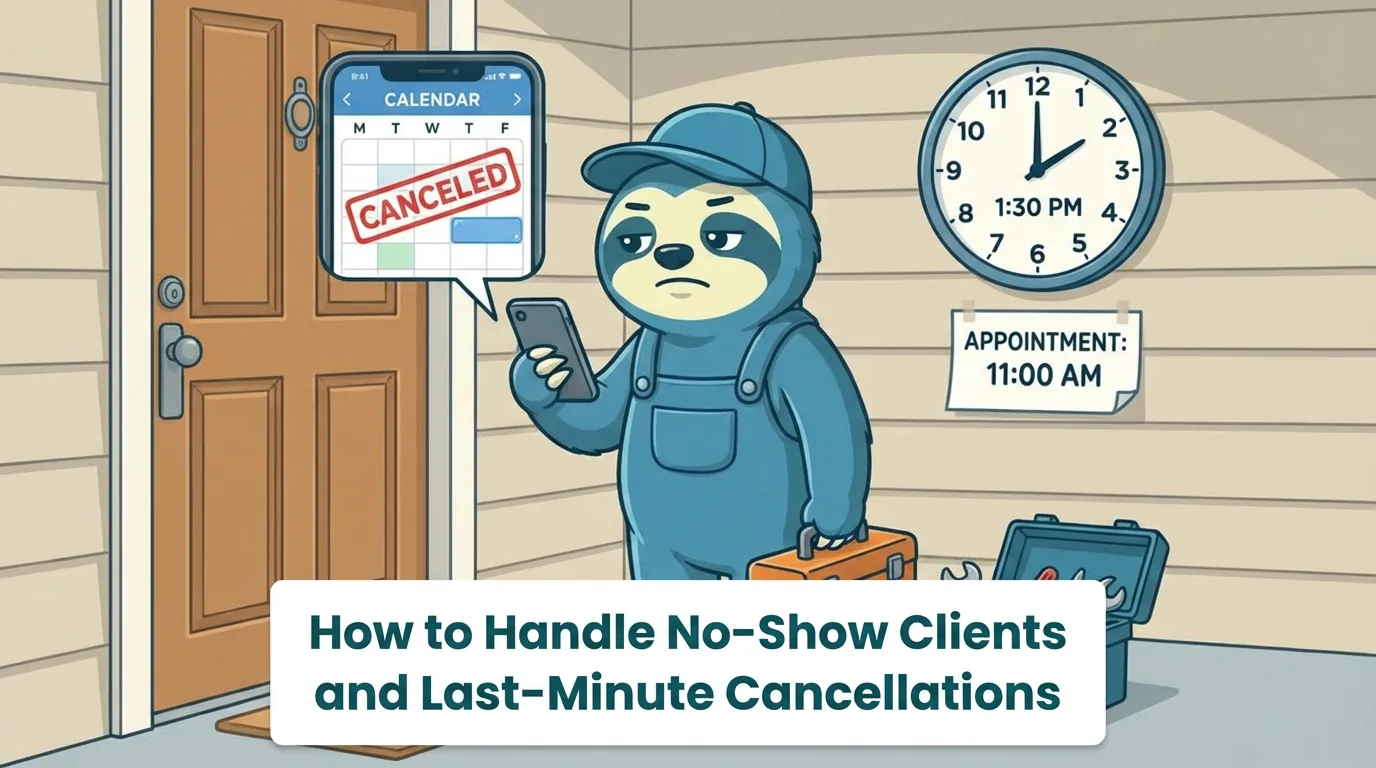
A technician pulls up to a house, knocks on the door, waits five minutes, calls the client, gets voicemail, and drives away. That sequence just cost you somewhere between $80 and $200 depending on your market, your technician's hourly rate, and how far the truck rolled. The job slot is gone. The technician is now idle until the next appointment, which might be 45 minutes away. And the client who caused all of this will probably call back next week expecting the same availability they just wasted.
No-shows and last-minute cancellations are one of the most expensive operational problems in field service, and most contractors handle them with frustration instead of systems. They absorb the cost, complain about it in the truck, and hope the next client shows up. That approach guarantees the problem continues. The businesses that actually solve this treat it like any other operational risk - they measure it, build policies around it, communicate those policies clearly, and enforce them consistently.
The goal is not to punish clients. The goal is to protect your schedule, your team's time, and your ability to serve the clients who do show up.
The Real Cost of a No-Show Goes Beyond the Empty Slot
When a client no-shows, the obvious cost is the lost revenue from that appointment. But the actual damage is wider than that. Your technician was dispatched, which means fuel, vehicle wear, and labor cost for the drive. If you run tight routes - which you should - that empty slot disrupts the flow of the entire day. The tech might arrive at the next job early and wait, or the gap might not be long enough to squeeze in another call.
There is also the opportunity cost. That slot could have gone to a paying client who was ready and waiting. In peak season, every no-show is a job you turned away or pushed to next week. Over a month, even a 5 percent no-show rate on a busy schedule can translate to thousands in lost revenue and dozens of wasted technician hours.
| Cost Type | What It Includes | Typical Range |
|---|---|---|
| Direct - truck roll | Fuel, vehicle wear, technician drive time | $30 - $80 per visit |
| Direct - idle labor | Technician time between jobs | $20 - $60 per hour |
| Opportunity cost | Lost revenue from the unfilled slot | Full job value |
| Morale and retention | Technician frustration, lower engagement | Hard to quantify |
The morale cost is real too. Technicians who regularly show up to empty houses start to feel like their time is not respected. That frustration compounds, especially for techs paid hourly who feel the sting of unproductive time. Good dispatch operations protect their people from this kind of waste, and good policies make it preventable rather than inevitable. 🚫
Build a Cancellation Policy Before You Need One
Most contractors do not have a written cancellation policy. They handle no-shows case by case, which means inconsistently. One client gets a pass, another gets charged, and the office staff has no clear guidance on what to do. That inconsistency creates internal confusion and external resentment.
Your cancellation policy does not need to be complicated. It needs to cover three things: how much notice you require for cancellations (24 to 48 hours is standard), what happens when a client cancels inside that window, and what happens when a client simply does not answer the door. The fee structure should be tied to your real costs. If a truck roll costs you $100 in labor and fuel, a $75 to $100 no-show fee is reasonable and defensible.
Write the policy down. Put it on your website. Include it in your booking confirmation. Make it part of what your office staff communicates when scheduling appointments. The policy is not about being rigid - it is about setting clear expectations so both sides know the rules before the appointment happens. 📋
Communicate the Policy During Booking, Not After the No-Show
A cancellation policy only works if the client knows about it before they miss the appointment. Disclosing a fee after someone no-shows feels punitive and will generate complaints. Disclosing it during booking feels professional and reasonable.
When your office books an appointment, the confirmation message should include a brief mention of the policy. Something like: "Please note that cancellations made less than 24 hours before your scheduled appointment are subject to a $75 fee. If you need to reschedule, just let us know and we will find a new time that works." That language is firm but friendly. It communicates respect for your time without sounding aggressive.
For online booking, include the policy on the confirmation page and in the confirmation email. For phone bookings, train your staff to mention it naturally as part of the scheduling conversation. The key is that the client agrees to the terms before the appointment, not that they discover them afterward.
Confirmation Sequences That Actually Prevent No-Shows
The single most effective tool against no-shows is a well-timed confirmation sequence. Most clients who no-show are not doing it maliciously. They forgot, they double-booked themselves, or something came up and they did not think to call. A good reminder sequence catches these situations before they become empty doorsteps.
The timing matters more than the medium. A confirmation sent at booking locks in the appointment. A reminder sent 48 hours before gives the client enough time to cancel or reschedule and gives you enough time to fill the slot. A morning-of reminder reduces forgetfulness and prompts clients to confirm they will be home. That three-touch sequence - booking, 48 hours, morning of - is the baseline that most successful service businesses use.
| Touch Point | Timing | Channel | Purpose |
|---|---|---|---|
| Booking confirmation | Immediately after scheduling | Email + SMS | Lock in the appointment, disclose policy |
| 48-hour reminder | 2 days before appointment | SMS (ask for reply) | Early warning - time to rebook if needed |
| Morning-of reminder | Day of, 1-2 hours before | SMS | Reduce forgetfulness, prompt final confirmation |
Text messages outperform emails for reminders by a wide margin. Open rates on SMS are above 90 percent, while email reminders often sit unread. If your scheduling software supports automated text reminders, turn them on and make sure the 48-hour message asks for a confirmation reply. That reply is your early warning system. Clients who do not confirm at 48 hours are your highest risk for no-shows, and a quick phone call to those clients can save the slot. 📞
What to Charge and How to Collect It
Setting a no-show fee is straightforward if you tie it to your actual costs. Calculate what a wasted appointment costs you in technician labor, fuel, and lost opportunity. Most service businesses land between $50 and $150 depending on trade and market. Some charge a flat fee; others charge a percentage of the estimated job value for larger projects.
| Fee Approach | Best For | Typical Amount | Collection Method |
|---|---|---|---|
| Flat fee | Routine service calls | $50 - $100 | Card on file or invoice |
| Percentage of estimate | Larger projects | 10% - 20% of job value | Card on file |
| Full deposit | Chronic no-show clients | 25% - 50% of job value | Collected at booking |
The collection method matters. If you collect a credit card at booking - which is increasingly standard - you can charge the no-show fee automatically after a missed appointment. This is the cleanest approach because it removes the awkward collection conversation. Make sure your booking process includes authorization for the no-show charge, and make sure that authorization is documented.
If you do not have a card on file, send the no-show fee as an invoice immediately. The faster you send it, the more seriously clients take it. Waiting a week to invoice a no-show sends the message that the fee is optional. Some clients will dispute it, and some will ignore it. That is okay. The policy's primary value is deterrence, not collection. Even if you only collect 60 percent of no-show fees, the existence of the policy will reduce your no-show rate significantly. 💡
Rebooking Strategies to Fill Cancelled Slots
When a cancellation comes in - especially inside the 48-hour window - you need a system for filling that gap quickly. The best approach is maintaining a short list of clients who want earlier appointments. Every service business has clients who booked a week or two out but would happily take a sooner slot. Keep a running list of these flexible clients and call them first when a cancellation opens up.
Your dispatch process should also account for same-day flexibility. If a 10 AM slot opens up and your next confirmed job is at 1 PM, the technician has three hours of potential productivity. Can you pull forward the 1 PM job? Can you slot in a quick maintenance call from the waitlist? The answer depends on how well your scheduling system handles real-time changes and how empowered your dispatcher is to make those calls.
Another strategy is overbooking high-risk slots slightly, similar to how airlines manage capacity. If you know that Tuesday mornings have a 15 percent cancellation rate based on historical data, booking one extra appointment in that window protects your utilization. This requires good data and careful judgment, but it is a legitimate technique for businesses with consistent no-show patterns.
When to Fire a Chronic No-Show Client
Not every client is worth keeping. If someone has no-showed three or more times in a year, they are costing you more than they are paying you. The direct costs of missed appointments add up, but the indirect costs - dispatcher time spent rebooking, technician frustration, and schedule disruption - are even larger.
Having the conversation does not need to be confrontational. A straightforward message works: "We have had several missed appointments this year, and each one costs our team a scheduling slot and a truck dispatch. We would love to continue working with you, but we need to require prepayment for future appointments to hold the slot." Most chronic no-show clients will either agree to the new terms or self-select out. Both outcomes are fine.
The hesitation most owners feel about firing clients comes from scarcity thinking. It feels risky to turn away revenue. But a client who no-shows 30 percent of the time is not reliable revenue - they are unreliable cost. Replacing them with a client who actually shows up improves your utilization, your team's morale, and your bottom line. 🎯
How to Fill Cancelled Slots on Short Notice
Speed is everything when a same-day cancellation hits. The first 30 minutes after a cancellation determine whether that slot generates revenue or becomes dead time. Your office staff should have a clear protocol: check the waitlist first, then check for nearby jobs that could be pulled forward, then check for any outstanding callbacks or follow-up visits in the area.
Automated systems help enormously here. If your scheduling software can flag clients who requested earlier availability, your dispatcher can reach out with a single tap instead of scrolling through notes. The faster you can offer a cancelled slot to a waiting client, the higher your fill rate.
- Maintain a "want sooner" list of clients who booked future appointments but expressed interest in earlier availability. Call these clients first when a same-day slot opens.
- Batch nearby small jobs for gap-filling. Maintenance visits, follow-up inspections, and warranty checks are ideal for short-notice scheduling because they are low-commitment and geographically flexible.
Geographic proximity matters too. A cancelled slot in the north end of your service area is best filled with another north-end job, not a cross-town drive that eats half the recovered time in transit. Your dispatcher should filter the waitlist by zone before making calls.
Building the Habit Into Your Team
A no-show policy only works if your entire team follows it consistently. That means training your office staff on how to communicate the policy during booking, training your technicians on what to do when they arrive at an empty house, and training your dispatcher on the rapid rebooking protocol.
For technicians, the procedure should be simple: arrive at the scheduled time, knock, wait five minutes, call the client, wait five more minutes, document the visit with a timestamped photo of the address, and move to the next job. That documentation protects you if a client disputes the no-show fee later. It also creates a clear record that helps you identify patterns over time.
For office staff, the key habit is consistency. Every booking gets the policy disclosure. Every 48-hour reminder gets sent. Every no-show gets invoiced. When the process is the same every time, it stops feeling like a confrontation and starts feeling like standard procedure - because it is. The businesses that struggle with no-shows are almost always the ones applying their policy selectively, which trains clients to believe the rules are optional.
Frequently Asked Questions
Ready to transform your field service business?
Start using WorkZen today. It's free to get started!