Contractor Insurance Cost: 2026 Rates by Policy
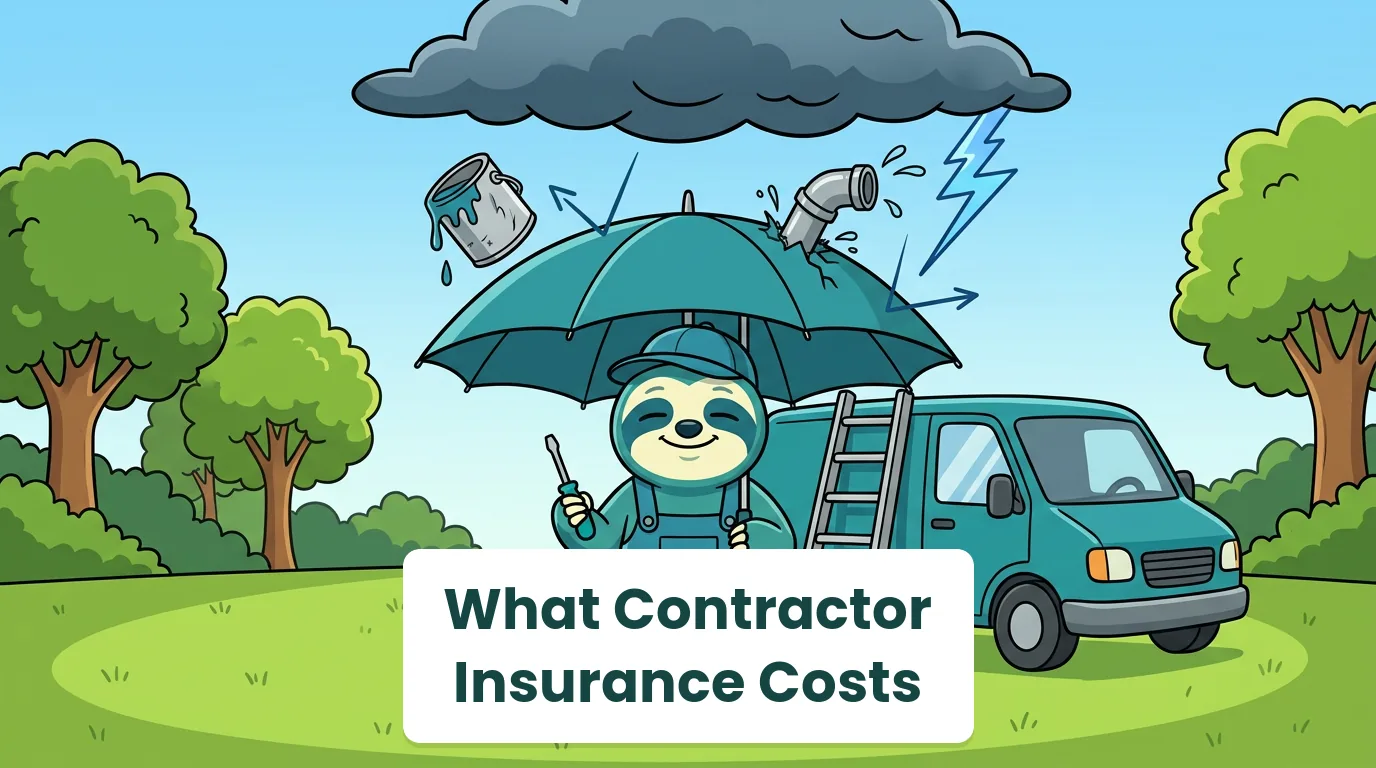
Insurance is the bill most contractors pay without really knowing what they are paying for. It shows up once a year, it is hard to compare, and it only feels real on the day something goes wrong: a ladder through a window, a tech who slips on a roof, a truck that backs into a client's fence.
This guide breaks down what contractor insurance actually costs in 2026, policy by policy and trade by trade, what pushes your premium up or down, how it works in Canada, and how to pay less without being underinsured. We are a software company, not an insurer, so we have nothing to sell you here except a clearer picture. The numbers below come from insurer data with dates attached.
This article is general information, not insurance advice. Coverage needs and legal requirements vary by trade, state and province. Get quotes and advice from a licensed broker before you buy.
How Much Does Contractor Insurance Cost?
Insureon's 2026 medians for small construction businesses are about $89 a month for general liability, $125 for a business owner's policy, $175 for workers' compensation and $268 for commercial auto. Liability alone stays under $100 a month; a crew with a BOP (liability included), workers' comp and commercial auto pays about $568.
Those medians come from Insureon's July 2026 data on more than 40,000 small construction businesses, most with fewer than five employees and annual revenue from about $50,000 to over $200,000. Insureon uses medians because they exclude outlier premiums at both ends, so they are a fair guide to what a typical small shop pays.
Contractor Insurance Cost by Policy Type
| Policy | What it covers | Median monthly | Median annual |
|---|---|---|---|
| General liability | Third-party injury and property damage | $89 | $1,069 |
| Business owner's policy (BOP) | General liability plus commercial property, bundled | $125 | $1,503 |
| Workers' compensation | Employee injuries on the job | $175 | $2,101 |
| Commercial auto | Vehicles used for work | $268 | $3,212 |
| Professional liability | Mistakes in advice, design or estimates | $67 | $808 |
| Tools and equipment | Theft or damage to your gear, on site or in the truck | $42 | $505 |
| Commercial umbrella | Extra limits above your other policies | $93 | ~$1,111 |
| Builder's risk | Structures under construction | $136 | ~$1,635 |
| Surety bonds | Guarantees required by licences or contracts | $9 | ~$112 |
USD. Medians for small construction businesses from Insureon, updated July 21, 2026.
Two things to notice. First, commercial auto and workers' comp are the big lines, not liability. Second, a BOP costs only about $36 a month more than general liability alone at the median, because it bundles property coverage. If you have a shop, a storage unit or expensive equipment, that bundle is often the better deal.
Contractor Insurance Cost by Trade
Trade is one of the biggest drivers of price, because insurers price the risk of what you do. Here are Insureon's medians for common trades (USD, monthly):
| Trade | General liability | BOP | Workers' comp | Commercial auto | Data updated |
|---|---|---|---|---|---|
| Electrician | $61 | $100 | $140 | $275 | July 28, 2026 |
| Handyman | $81 | $105 | $108 | $188 | July 31, 2026 |
| Plumber | $147 | $213 | $179 | $285 | August 5, 2026 |
| General contractor | $162 | $125 | $196 | $287 | July 31, 2026 |
| Landscaper | $51 | $94 | $169 | $204 | February 24, 2026 |
USD medians from Insureon's trade cost pages for electricians, handymen, plumbers, general contractors and landscapers.
Electrical contractor insurance cost
Electricians have one of the lower general liability medians at about $61 a month, but commercial auto ($275) is higher than average, since most electricians drive a loaded van between jobs. Many states tie an electrical licence to proof of liability coverage, so check your licensing board's minimum limits.
Handyman insurance cost
A solo handyman with general liability ($81) and tools and equipment coverage (about $42) typically pays well under $150 a month. Workers' comp only enters the picture once you hire. If you are just starting out, our guide to starting a handyman business covers licensing and insurance by province and state.
HVAC and plumbing contractor insurance cost
Plumbers have the highest liability and BOP medians in this set ($147 and $213), largely because water damage claims are expensive. Insureon does not publish a separate HVAC cost page; plumbing is the closest comparable trade, since HVAC work carries similar property damage and gas-line risk.
General contractor insurance cost
General contractors pay more for liability ($162 median) because they are responsible for the whole job, including the subs they hire. Umbrella coverage is also more common, with a median of $140 a month for general contractors.
Independent contractor insurance cost
If you work as an independent sub, you still need your own policy. Most GCs will not let you on site without a certificate of insurance, and their policy generally does not extend to your work. For a solo sub, general liability plus tools coverage is the common starting point.
How Much Is a $1 Million Liability Policy?
$1 million per occurrence with a $2 million aggregate is the most common limit in contracting, and it is what most general contractors, property managers and commercial clients ask for. Insureon notes that the typical general contractor general liability policy in its data carries exactly those limits, so the medians above are a reasonable guide to what a $1 million policy costs: about $89 a month across construction trades and about $162 for general contractors (July 2026).
Lower limits, such as $500,000, cost less, but they can lock you out of work that requires $1 million. If a client or GC needs more than $2 million, an umbrella policy is usually cheaper than raising the limits on the base policy.
What Kind of Insurance Should a Contractor Have?
Coverage usually grows with the business. A typical progression:
| Stage | Common coverage |
|---|---|
| Solo, using your own vehicle | General liability, tools and equipment |
| Solo with a work vehicle | Add commercial auto |
| First employee | Add workers' compensation (required in most states and all provinces once you hire) |
| Shop, storage or expensive equipment | Switch to a BOP to bundle property |
| Commercial or GC work | Umbrella, surety bonds, and builder's risk where contracts require it |
| Design or advice work | Professional liability |
This is a sketch, not a checklist. For a full review of what you carry and where the gaps are, work through our contractor insurance audit checklist with your broker.
What Drives Your Premium Up (and Down)
Insurers price risk. The biggest factors, per Insureon's list and standard underwriting practice:
- Trade and type of work: roofing and plumbing price higher than painting or electrical.
- Payroll and revenue: workers' comp is priced on payroll; liability often on revenue.
- Claims history: one large claim can raise your renewal for years.
- Location: states, provinces and even cities price differently.
- Residential vs commercial work: commercial jobs often need higher limits.
- Subcontractors without certificates: uninsured subs can end up on your policy at audit.
- Coverage limits and deductibles: higher limits cost more; higher deductibles cost less.
- Vehicles and drivers: number of trucks, their value, and your drivers' records.
A lot of these are things you control on the job, not at renewal. Clear job records, photos, signed estimates and accurate payroll make claims and audits faster and cheaper. That is where good software quietly saves you money: WorkZen job management keeps photos, notes and checklists on every job, and time tracking keeps the payroll figures that workers' comp audits are based on accurate. If you ever have to file a claim, our guide to what to do when a tech damages property walks through the first 24 hours.

Contractor Insurance in Canada
Canada works differently in one big way: workers' compensation is run by provincial boards, not sold by private insurers. You register with your province's board and pay premiums based on your industry class and payroll.
| Province | Board | 2026 rate snapshot |
|---|---|---|
| Ontario | WSIB | Average rate $1.23 per $100 of insurable payroll; construction subclasses G1 to G6 range from $1.54 to $3.55 per $100; maximum insurable earnings $121,700 per worker |
| British Columbia | WorkSafeBC | Average base rate $1.55 per $100 of assessable payroll, unchanged for the ninth year |
| Quebec | CNESST | Rates by unit classification; check CNESST for your trade |
CAD. Sources: WSIB 2026 premium rates and WorkSafeBC (January 5, 2026).
A quick illustration: an Ontario construction business with $200,000 of insurable payroll would pay between about $3,080 and $7,100 a year in WSIB premiums at the 2026 construction subclass rates, depending on its subclass and before any experience adjustments.
A few Canadian specifics worth knowing:
- Clearance certificates: general contractors in Ontario and other provinces routinely ask subs for a board clearance certificate before paying them, to avoid being liable for the sub's unpaid premiums.
- Construction rules are stricter: in Ontario, many independent operators and sole proprietors in construction need WSIB coverage even without employees. Check your board's construction rules before you assume you are exempt.
- Commercial general liability (CGL) is bought privately, and $2 million is a common limit for trades. Ratehub's May 2026 guide puts general liability for Canadian small businesses at roughly $400 to over $1,000 a year; contractors in higher-risk trades should expect to sit toward the higher end, since premiums rise with risk.
7 Ways to Lower Your Contractor Insurance Cost
- Bundle with a BOP if you have property or equipment worth insuring. At the median it costs little more than liability alone.
- Pay annually if your insurer discounts it, and budget the payment into your slow season.
- Raise your deductible on policies where you could absorb a small claim yourself.
- Collect certificates from every sub and keep them on file, so uninsured subs do not land on your policy at audit.
- Run a real safety program: training, ladder and vehicle rules, documented toolbox talks. Fewer claims mean lower renewals.
- Classify payroll correctly: office staff and field techs are priced very differently for workers' comp. Accurate time records keep you from overpaying at audit.
- Shop at every renewal through an independent broker who can quote several carriers. Loyalty is rarely rewarded in insurance pricing.
Premiums are also generally deductible as a business expense. See our list of tax deductions service business owners miss.
The Bottom Line
As of 2026, a small contractor pays a median of about $89 a month for general liability, and a crew with a BOP (liability included), workers' comp and commercial auto comes to about $568 a month at the medians, with trade, payroll, claims and location moving the number most. In Canada, workers' comp comes from your provincial board, and private CGL covers the rest.
Know what you carry, keep your job records and payroll clean, and shop your renewal every year. Start with our contractor insurance audit checklist.
WorkZen is field service management software with a free-forever plan for up to 3 users. Job photos, checklists and time tracking keep your records audit-ready. Start free, upgrade when you need more.
Frequently Asked Questions
Ready to transform your field service business?
Start using WorkZen today. It's free to get started!